

Himiway Cruiser E-Bike Review: Specs & Best Deals
Himiway Cruiser E-Bike Review: Is This Fat-Tire E-Bike Still Worth Buying?
The Himiway Cruiser built its reputation around a simple formula: big fat tires, strong electric assistance, long-range battery capacity and a comfortable all-terrain platform. But is the Himiway Cruiser e-bike still a smart buy today?
We break down the Cruiser's power, range, comfort, fat-tire handling, real-world strengths, limitations and the newer Himiway models you should consider before spending your money.
Editorial rating based on performance, practicality, features, value and long-term buying considerations.
Best Himiway Cruiser-Style E-Bikes to Consider
If you're searching for a Himiway Cruiser e-bike, the first thing to understand is that the original D3 Cruiser is now a legacy model. Himiway's 2026 product story describes the D5 2.0 as the evolution of the D3 Cruiser, while Himiway continues to provide D3 owner resources. That makes model availability particularly important when shopping.

Himiway D3 Cruiser
The original Cruiser is the model that established Himiway's reputation for affordable fat-tire performance.
- 750W geared hub motor
- 720Wh Samsung/LG battery
- Up to 50 miles claimed range
- 20+ mph claimed top speed
- 26 × 4-inch fat tires
- Up to 350 lb payload
- Shimano 7-speed drivetrain
Himiway D3 ST Cruiser
The step-through version is the better choice if easy mounting and dismounting are more important than a traditional high-step frame.
- 750W geared hub motor
- 720Wh Samsung/LG battery
- Up to 50 miles claimed range
- 20+ mph claimed top speed
- 26 × 4-inch fat tires
- 350 lb payload rating
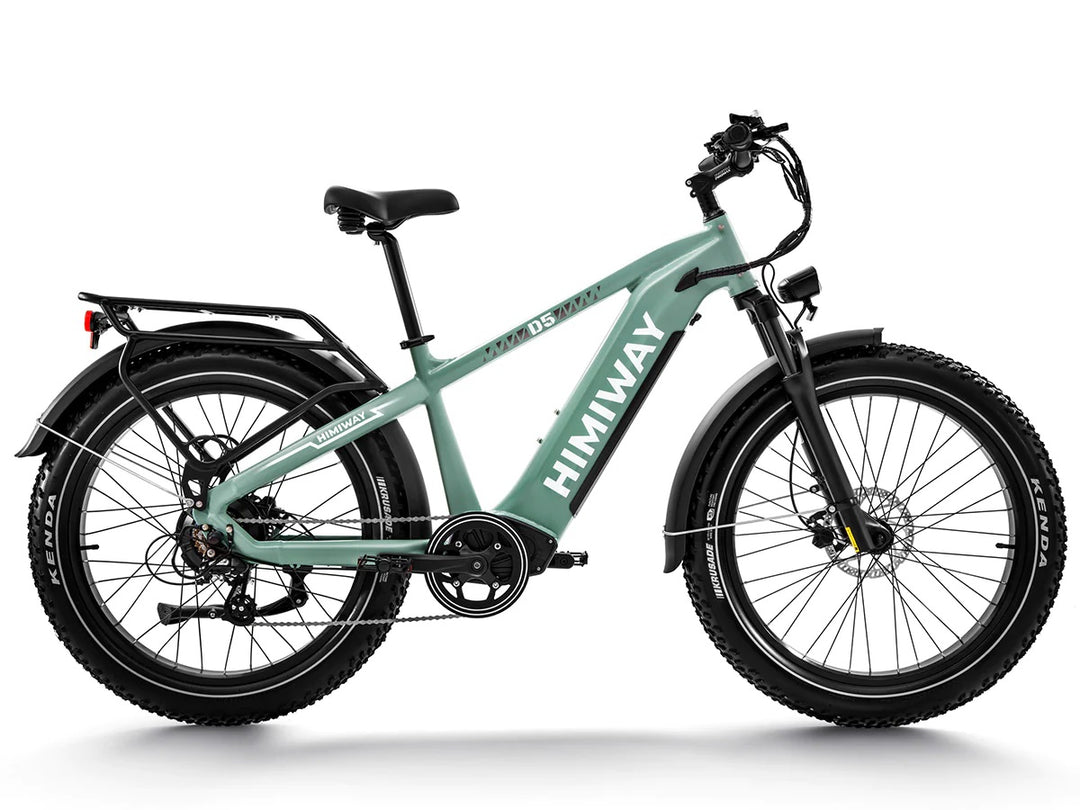
Himiway D5 / Zebra
A stronger modern alternative to the original Cruiser with a larger battery and upgraded braking system.
- 750W motor
- 960Wh Samsung/LG battery
- Up to 80 miles claimed range
- Torque-sensing configuration available
- 26-inch fat tires
- Hydraulic disc brakes
Quick Answer: Is the Himiway Cruiser E-Bike Good?
Yes — If You Want:
- A powerful fat-tire electric bike
- Strong hill-climbing assistance
- Comfortable all-terrain tires
- Longer battery range than entry-level e-bikes
- A heavy-duty 350-lb payload platform
- A versatile commuter and recreational bike
Think Twice If You Need:
- A very lightweight e-bike
- A compact folding design
- Premium hydraulic brakes on the original D3
- The newest Himiway technology
- A bike guaranteed to be available new
- A very compact bike for apartments
Himiway Cruiser vs Newer Himiway E-Bikes
A common mistake is to compare the Cruiser only on motor wattage. Battery size, braking hardware, suspension, sensors, tire size, payload capacity and rider fit can matter just as much.
| Feature | Himiway D3 Cruiser | D3 Cruiser ST | D5 2.0 |
|---|---|---|---|
| Position | Original Cruiser | Step-through Cruiser | Newer generation |
| Motor | 750W geared hub | 750W geared hub | 750W geared hub |
| Battery | 720Wh | 720Wh | Varies by configuration |
| Claimed Range | Up to 50 miles | Up to 50 miles | Longer-range configuration |
| Top Speed | 20+ mph | 20+ mph | Model/configuration dependent |
| Tires | 26 × 4" | 26 × 4" | Fat-tire options |
| Brakes | Mechanical disc | Mechanical disc | Hydraulic on D5 2.0 |
| Payload | 350 lb | 350 lb | Up to 440 lb on current D5 2.0 listing |
| Best For | Value Cruiser | Easy mounting | Premium upgrade |
| Check Availability | Check | Check | Check |
Electric Bike Power Calculator
Curious how motor wattage translates into horsepower and a rough speed estimate? Enter the motor wattage below.
Himiway Cruiser E-Bike: What Made It So Popular?
The Himiway Cruiser became popular because it occupied an attractive middle ground between a traditional bicycle and a powerful electric utility bike. Instead of focusing exclusively on low weight or sleek urban styling, Himiway gave the Cruiser a substantial frame, large 26-inch fat tires, front suspension and a relatively large battery.
That formula makes sense for riders who want one electric bike that can handle neighborhood streets during the week and gravel, grass, beach paths or rougher recreational surfaces on the weekend.
The original D3 Cruiser used a 750W geared hub motor and a 720Wh Samsung/LG battery. Himiway listed a maximum range of around 50 miles, although range figures for electric bikes should always be interpreted as best-case estimates rather than guaranteed real-world mileage.
Factors such as rider weight, temperature, tire pressure, wind, elevation, stop-and-go riding and pedal-assist level can significantly change the distance available from one charge.
750W Motor: Is It Enough?
For most recreational and utility riding, 750W is plenty of motor power. The important thing is not simply the number printed on the motor. A well-tuned controller, appropriate gearing and sufficient battery output determine how the bike actually feels.
The Cruiser's geared hub motor is particularly useful when climbing hills or accelerating from a stop. Compared with a lightweight city-oriented e-bike, the Cruiser has the motor capacity to move a heavier bike and rider combination without feeling excessively weak.
However, riders should not assume that 750W automatically means the bike will travel at a particular speed everywhere. Local regulations, controller settings, rider weight and terrain all matter.
720Wh Battery and Range
Battery capacity is one of the most important specifications when choosing an electric bike. The Cruiser's 720Wh battery was one of its strongest selling points because it offered considerably more energy storage than many inexpensive commuter e-bikes.
Himiway's published maximum range is approximately 50 miles for the D3 Cruiser. That number should be treated as a maximum rather than a promise. A heavy rider climbing hills using the throttle continuously can consume substantially more energy than a lightweight rider using moderate pedal assistance on flat pavement.
If you regularly ride 20 to 30 miles, a battery of this size can be particularly attractive because it gives you more flexibility. You don't need to charge after every short ride, and you have more reserve capacity when weather or terrain increases energy consumption.
26 × 4-Inch Fat Tires
Fat tires are one of the defining features of the Himiway Cruiser. The 26 × 4-inch setup gives the bike a broad contact patch and a substantial visual presence.
The biggest advantage is confidence. Riders traveling over gravel, packed dirt, grass, rough pavement and other imperfect surfaces often appreciate the additional stability of wide tires.
The trade-off is weight and rolling resistance. A fat-tire e-bike is rarely going to feel as quick or nimble as a lightweight road-style electric bike.
If your riding is almost entirely smooth pavement and you need to carry the bike upstairs every day, a lighter commuter e-bike may be a better choice. If you want stability and versatility, however, the Cruiser's tires are a major advantage.
Suspension and Ride Comfort
The Cruiser was designed as a comfort-oriented all-terrain e-bike rather than a pure road racer. Its front suspension helps reduce the harshness transferred from broken pavement, gravel and other uneven surfaces.
This matters because the combination of a heavy bike and wide tires encourages longer rides. A comfortable riding position can make a noticeable difference after an hour or two in the saddle.
350-Pound Payload Capacity
Another reason the Cruiser appeals to larger riders is its substantial payload rating. Himiway lists a maximum payload of 350 pounds for the D3 platform.
Payload capacity includes the rider and any carried cargo, so it is important to think about the total load rather than only rider weight.
Riders near the maximum payload should also expect range and acceleration to differ from the manufacturer's ideal test conditions. More weight requires more energy, particularly on hills.
Shimano 7-Speed Drivetrain
Electric assistance does not make mechanical gearing irrelevant. Having multiple gears allows the rider to select a more appropriate cadence for hills, flat roads and higher-speed riding.
The Cruiser's Shimano 7-speed setup gives it useful versatility for mixed riding. On climbs, a lower gear can reduce the effort required from the rider. On flatter sections, higher gears can make pedaling more comfortable.
Mechanical Disc Brakes: The Biggest Reason to Consider an Upgrade
One area where newer Himiway models have an advantage is braking technology. The original Cruiser uses mechanical disc brakes, while newer models such as the D5 2.0 move toward hydraulic braking.
Mechanical disc brakes can provide reliable stopping power and are relatively straightforward to maintain. However, hydraulic brakes generally provide a more refined lever feel and can be attractive on heavier, faster or more expensive e-bikes.
If you're choosing between a discounted older Cruiser and a newer model at a relatively small price difference, this is one of the upgrades worth considering.
Who Should Buy the Himiway Cruiser?
The Himiway Cruiser is most compelling for riders who want a stable, powerful and comfortable fat-tire e-bike rather than a minimalist bicycle.
- Adults who want a comfortable recreational e-bike
- Riders who regularly encounter gravel or rough pavement
- Larger riders who need higher payload capacity
- Commuters who want substantial battery capacity
- Riders who enjoy beach, park and mixed-surface paths
- People who prefer fat-tire stability
Who Should Skip the Cruiser?
No electric bike is perfect for every buyer. The Cruiser's biggest disadvantages are its weight, physical size and the fact that the original D3 is no longer Himiway's newest generation.
If you live in an apartment without an elevator, regularly need to lift your e-bike into a vehicle or prioritize a very lightweight commute, look at a lighter city model.
Likewise, if you're paying close to the price of a newer Himiway model, the D5 2.0 deserves serious consideration because Himiway specifically developed it as the next generation of the Cruiser concept.
Himiway Cruiser vs Himiway D5 2.0
This is probably the most important comparison for someone shopping for a Himiway Cruiser e-bike in 2026.
The D3 established the basic formula: fat tires, a 750W motor, a substantial battery and a heavy-duty frame. The D5 2.0 keeps that general philosophy but introduces meaningful upgrades.
Himiway describes the D5 2.0 as the evolution of the D3 Cruiser, specifically pointing to improvements such as hydraulic brakes, torque-sensor technology and a redesigned suspension system.
Therefore, the D3 makes the most sense when you find a genuinely attractive deal or already own one. For a brand-new purchase, the D5 2.0 should normally be on the shortlist.
Is the Himiway Cruiser Good for Long Rides?
Yes, with one important qualification: range depends heavily on how you ride.
The combination of a large battery, upright riding position, fat tires and suspension makes the Cruiser well suited to recreational rides. However, riders should not plan a 50-mile route assuming the bike will definitely complete it on one charge.
A smart long-distance rider leaves a reserve. Wind, hills, cold temperatures and aggressive throttle use can reduce range significantly.
How Fast Is the Himiway Cruiser?
Himiway lists the Cruiser at 20+ mph depending on configuration and market. Exact legal speed classifications can differ by location, so riders should always check their local e-bike regulations.
Remember that motor wattage and top speed are not interchangeable. A 750W motor does not mean an e-bike automatically travels at a specific speed. Controller programming, voltage, wheel size, rider weight and aerodynamics all affect performance.
Himiway Cruiser E-Bike Buying Checklist
- Check whether the exact Cruiser configuration is still available.
- Compare its price against the D5 2.0.
- Confirm whether the bike includes the rack and accessories you actually need.
- Check the battery specification and charging equipment.
- Verify the frame style and rider height range.
- Check current shipping, return and warranty terms before purchasing.
- Check your local regulations for speed and throttle use.
Why Himiway's Fat-Tire Formula Works
Fat tires have become increasingly popular because they make an e-bike feel more planted. Instead of being nervous about every crack, patch of gravel or uneven section of pavement, riders can approach mixed surfaces with greater confidence.
That doesn't mean fat tires make an e-bike unstoppable. Tire pressure still matters, wet surfaces still require caution and no tire can eliminate the risks of poor road conditions.
But for recreational riding, commuting and mixed terrain, the Cruiser format offers an appealing balance between stability and capability.
Maintenance Tips for a Himiway Cruiser
Like any e-bike, the Cruiser benefits from routine maintenance. Keeping tire pressure within the recommended range is especially important because underinflated fat tires can increase rolling resistance and reduce efficiency.
Check brake pads regularly, inspect cables and connectors, keep the drivetrain clean and lubricated, and periodically inspect bolts, spokes and the handlebar assembly.
Battery care matters too. Avoid exposing the battery to extreme temperatures for prolonged periods and use the manufacturer's recommended charger.
Should You Buy the Himiway Cruiser in 2026?
If you find a discounted original D3 Cruiser in excellent condition, it can still be a compelling fat-tire e-bike. The fundamental hardware remains useful: 750W motor power, a 720Wh battery, large tires, suspension and a 350-pound payload rating.
The bigger question is price. Once an older Cruiser approaches the price of a current-generation Himiway, the newer bike becomes more attractive because you gain updated components and newer technology.
That's why our recommendation is simple: check the current Himiway lineup before buying the original Cruiser.
If the D3 is heavily discounted and fits your needs, it can be a value play. If the price gap is small, consider the D5 2.0.
Himiway Cruiser E-Bike FAQ
Is the Himiway Cruiser a good e-bike?
Yes. The original Himiway Cruiser is a capable fat-tire e-bike with a 750W geared hub motor, 720Wh battery, 26×4-inch tires and a 350-pound payload rating. Its main disadvantage in 2026 is that it has been superseded by newer Himiway models.
How far can the Himiway Cruiser go on one charge?
Himiway lists up to approximately 50 miles for the D3 Cruiser. Actual range varies according to rider weight, terrain, assist level, wind, tire pressure, temperature and riding style.
How powerful is the Himiway Cruiser?
The D3 Cruiser uses a 750W geared hub motor. Some published specifications also describe higher peak output. Actual performance depends on controller settings, battery condition, rider weight and terrain.
What is the top speed of the Himiway Cruiser?
Himiway lists the Cruiser at 20+ mph depending on configuration and market. Local e-bike laws can impose different speed limits and classifications.
How much weight can the Himiway Cruiser carry?
The D3 Cruiser is listed with a maximum payload capacity of 350 pounds. Payload includes the rider and cargo.
Does the Himiway Cruiser have fat tires?
Yes. The original Cruiser uses 26×4-inch fat tires, which provide additional stability and traction on many mixed surfaces.
Is the Himiway Cruiser good for hills?
Its 750W geared hub motor and seven-speed drivetrain make it well suited to moderate hills. However, steep grades, rider weight, battery charge and terrain all influence climbing performance.
Should I buy the Cruiser or Himiway D5 2.0?
For a new purchase, the D5 2.0 deserves serious consideration. Himiway describes the D5 2.0 as the evolution of the D3 Cruiser and highlights upgrades including hydraulic brakes, torque sensing and redesigned suspension.
Is the Himiway Cruiser still available?
Availability varies. Himiway's current 2026 materials describe the D3 Cruiser as a retired model, although owner resources and some regional product pages remain online. Always check current stock before planning a purchase.
What makes the Himiway Cruiser different from a normal e-bike?
The Cruiser combines a high-capacity battery, powerful motor, 26×4-inch fat tires, suspension and a heavy-duty frame. It is aimed more at stability and mixed-terrain versatility than lightweight urban commuting.
Ready to Check the Himiway Cruiser?
The original Cruiser remains an interesting option, but availability and pricing can change as Himiway transitions shoppers toward newer models. Check the current lineup before making your final decision.
Compare the Cruiser, D3 ST and newer Himiway options now.
Check Current Himiway Deals →