

Himiway Cruiser Review: Best Cruiser E-Bike?
Himiway Cruiser Review: Is It Still Worth Buying?
If you searched for the Himiway Cruiser because you want a comfortable, powerful fat-tire e-bike, there is one important update: Himiway now lists the D3 Cruiser as sold out and points shoppers toward the newer D5 2.0 family. Here is what to buy instead—and when the older Cruiser still makes sense.
Check Current Himiway Offers →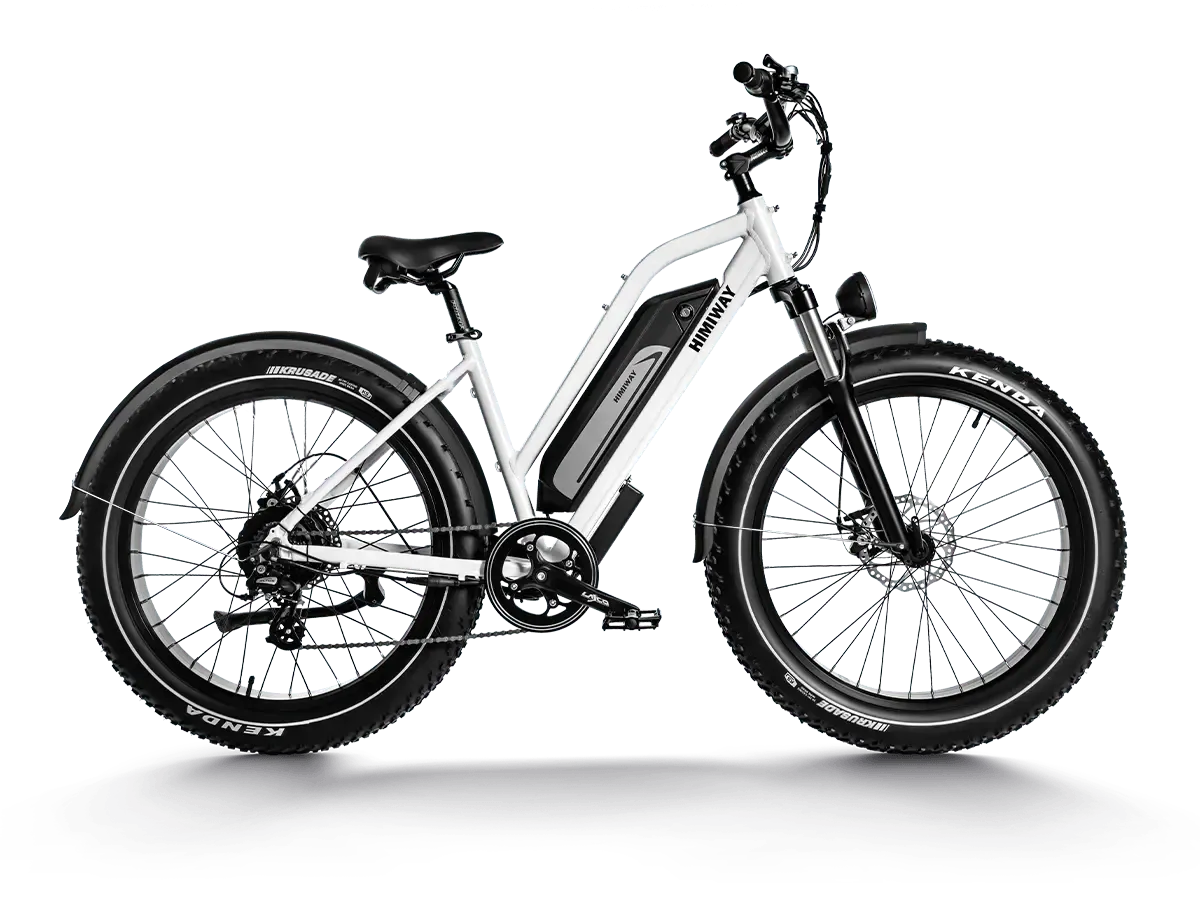
Featured: Start With the Right Bike, Not Just the Right Brand
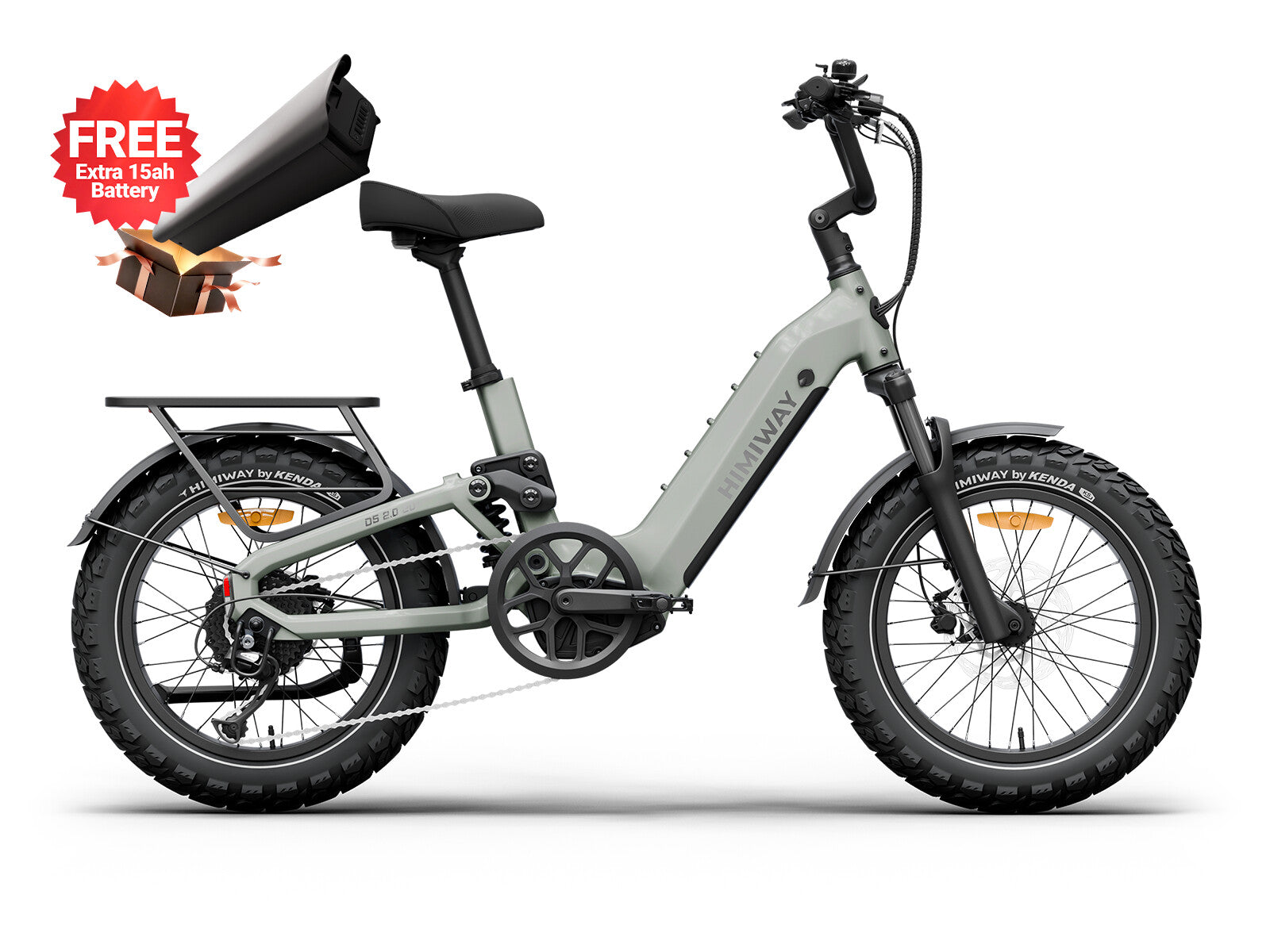
Himiway D5 2.0 20" — Easy to Maneuver, Built for Comfort
The D5 2.0 20" keeps the fat-tire, comfort-first idea behind the Cruiser while moving to a newer full-suspension platform. Himiway lists a 750W motor, 90Nm torque, 440 lb payload capacity, switchable torque/cadence sensing and up to 70 miles of pedal-assist range under stated conditions.
- 20×4.0 fat tires and full suspension
- 750W motor with 90Nm torque
- 440 lb payload capacity
- Lower 17" standover and compact 20" wheels
- Torque or cadence riding modes
- Strong option for comfort-focused and shorter riders
Price and promotions can change. Verify the live product page before purchasing.
Best Himiway Cruiser Alternatives in 2026
If your goal is the relaxed, stable feel associated with a Himiway Cruiser, these are the Himiway models worth comparing before you spend $2,000 or more.
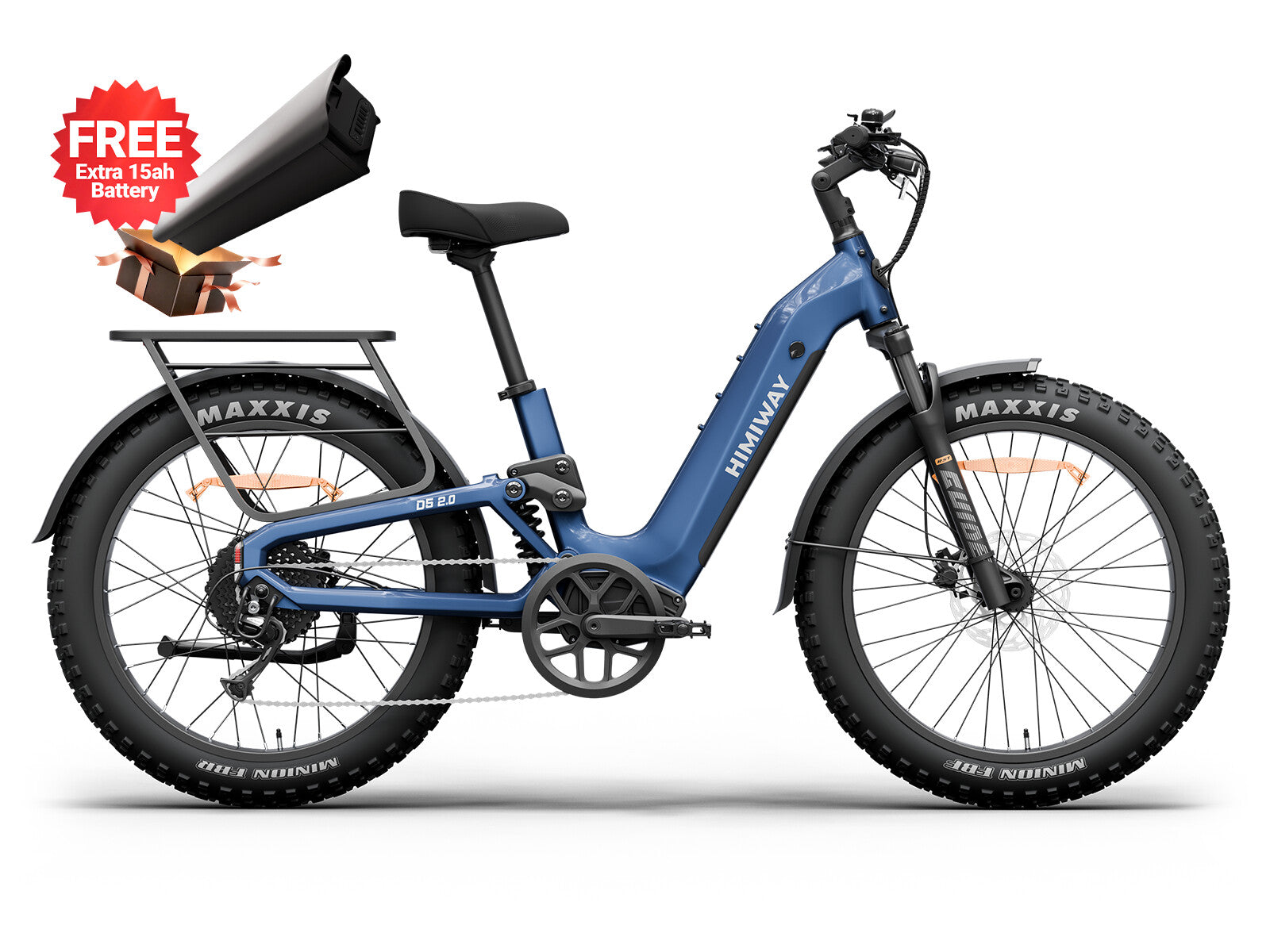
Himiway D5 2.0 ST
Our pick for riders who want the easiest transition from a traditional cruiser to a modern step-through e-bike.
- 750W / 90Nm geared hub motor
- Full suspension with 100mm front and 130mm rear travel
- 26×4.0 Maxxis fat tires
- 400 lb payload capacity
- Torque + cadence sensor modes
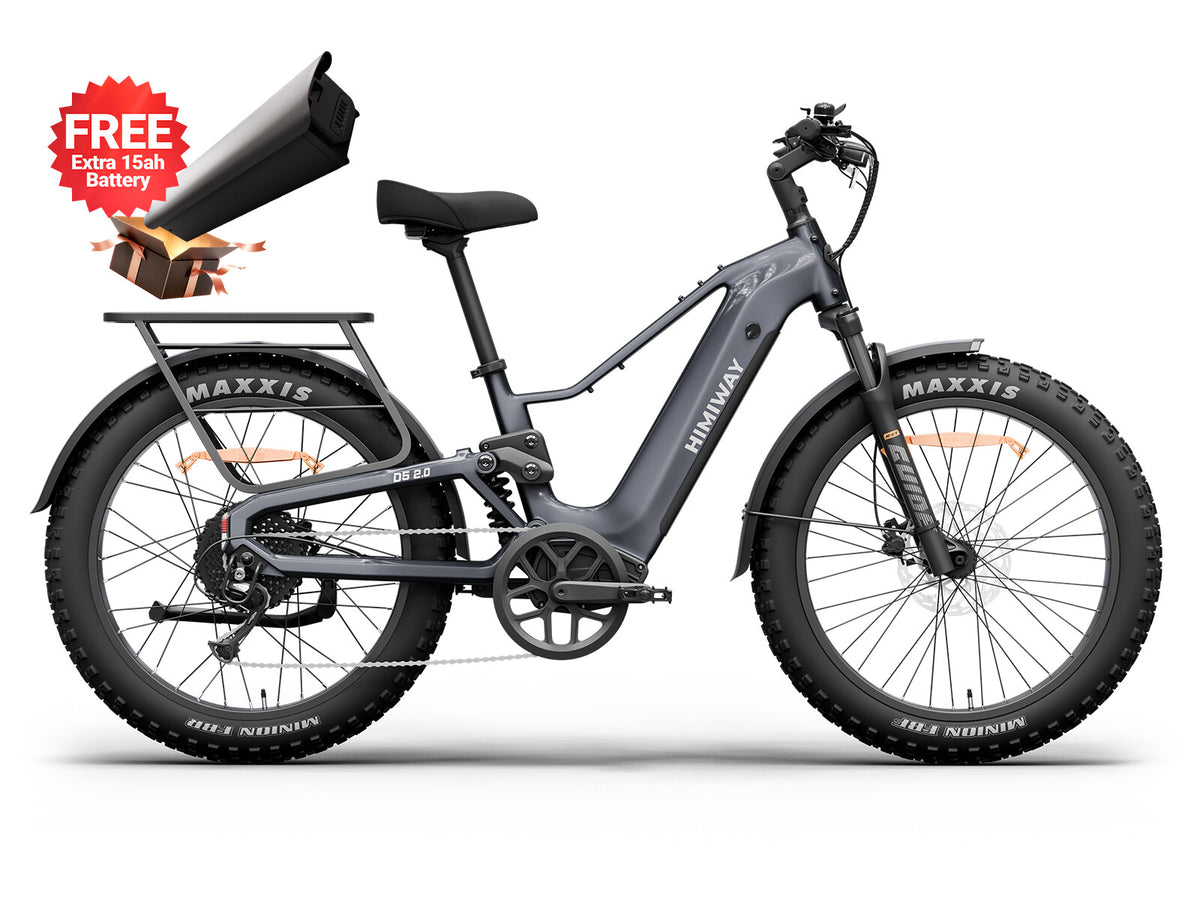
Himiway D5 2.0
The step-over D5 2.0 is designed around a larger 26-inch platform, full suspension and comfort for taller or heavier riders.
- 750W motor with 90Nm torque
- Full suspension and 26×4.0 Maxxis tires
- 400 lb payload capacity
- Up to 70 miles pedal-assist range listed
- 8-speed Shimano drivetrain
D5 2.0 20"
A particularly interesting choice for shoppers searching for a Cruiser because it combines a low standover, compact wheels and a large payload rating.
- 4'11"–6'3" stated rider range
- 17" standover height
- 750W / 90Nm motor
- 440 lb payload capacity
- 70-mile maximum pedal-assist range listed

Himiway A7 Commuter
If you like the comfort of a cruiser but spend most of your time on pavement, the A7 is a logical alternative with full suspension and a step-through frame.
- 750W / 70Nm hub motor
- 120mm front suspension
- Up to 70 miles pedal-assist range listed
- 400 lb payload capacity
- Hydraulic disc brakes and 8-speed drivetrain
Himiway Cruiser: What Changed?
The name “Himiway Cruiser” can be confusing because shoppers may find older reviews, used listings, and current Himiway pages at the same time. The original D3 Cruiser family was built around the formula that made fat-tire cruisers popular: upright comfort, a 750W rear hub motor, 26×4 tires, a large battery and a sturdy aluminum frame.
Himiway's current D3 Cruiser ST page now says the D3 Cruiser is sold out and directs customers to the D5 2.0 ST. That makes the D5 family the more practical starting point for a new purchase. The D5 2.0 ST keeps the broad, planted feel but adds a more modern platform, full suspension, a torque/cadence sensor system, hydraulic braking and an adjustable stem.
For shoppers who specifically want the classic D3 Cruiser, a used or remaining dealer unit can still be attractive if the condition, battery health and price are right. But the risk is different: an older e-bike is a battery-powered vehicle, so you should inspect battery age, charging behavior, brake wear, drivetrain wear, tire condition and replacement-part availability before paying a premium for a discontinued model.
Himiway Cruiser vs D5 2.0: Which One Should You Buy?
| Feature | Original D3 Cruiser / Cruiser ST | D5 2.0 ST | D5 2.0 20" | A7 |
|---|---|---|---|---|
| Positioning | Classic fat-tire cruiser | Modern cruiser-style step-through | Compact comfort e-bike | Urban comfort commuter |
| Motor | 750W | 750W / 90Nm | 750W / 90Nm | 750W / 70Nm |
| Battery | 48V 15Ah listed on D3 page | 48V 15Ah platform | 48V 15Ah platform | 48V 15Ah platform |
| Wheels | 26×4 fat tires | 26×4 fat tires | 20×4 fat tires | 27.5×2.4 |
| Suspension | Front suspension | Full suspension | Full suspension | Full suspension |
| Brakes | Mechanical disc | Hydraulic disc | Hydraulic disc | Hydraulic disc |
| Payload | 350 lb | 400 lb | 440 lb | 400 lb |
| Best for | Classic Cruiser feel / used market | Most Cruiser shoppers | Lower standover / maneuverability | Paved commuting |
Himiway Cruiser Motor Power: Watts vs Horsepower
E-bike shoppers often see a number like 750W and wonder how that compares with horsepower. The simple electrical conversion is 1 horsepower ≈ 746 watts, so 750W is approximately 1.01 mechanical horsepower when you make a direct mathematical conversion. That does not mean an e-bike behaves exactly like a 1-horsepower gasoline engine. Electric motors deliver torque differently, and the bike's controller, battery voltage, gearing, rider weight and terrain all affect real-world acceleration.
Interactive E-Bike Power Calculator
Use this as a quick comparison tool. The horsepower figure is a simple watts ÷ 746 conversion, while estimated speed is intentionally only a rough reference—not a guarantee of road speed.
How We Would Choose a Himiway Cruiser Replacement
1. Start with riding position
The biggest reason people like cruiser-style e-bikes is not raw motor output. It is the feeling of control. An upright position, wide tires and a comfortable saddle can make a 45-minute ride feel dramatically different from a narrow-tire performance e-bike. If you are coming from a traditional cruiser, the D5 2.0 ST is the natural place to start because the step-through frame and full suspension prioritize easy access and comfort.
2. Match wheel size to your environment
The D5 2.0 uses a larger 26-inch fat-tire setup, while the D5 2.0 20-inch model trades some wheel diameter for a lower, more compact package. Smaller wheels can feel easier to maneuver at low speeds and in tight spaces. Larger wheels can feel more natural for taller riders and longer, straighter routes. Neither is automatically better—the right answer depends on your height, storage space and typical terrain.
3. Don't buy a motor rating without looking at torque
Watts are useful, but they are not the whole story. Himiway lists the D5 2.0 at 750W and 90Nm, while the A7 is listed at 750W and 70Nm. For hill starts, heavier loads and low-speed control, torque is an important specification to compare. The controller and battery also matter because the motor cannot deliver sustained output without adequate electrical support.
4. Range numbers are maximum-condition figures
Himiway's product pages publish different range figures depending on the model and riding mode. The D5 2.0 20-inch page lists up to 40 miles of throttle range and up to 70 miles of pedal-assist range. Those are not promises that every rider will achieve those distances. Rider weight, hills, wind, temperature, tire pressure, assist level, stop-and-go traffic and battery age can materially change actual range.
5. Comfort is more than the saddle
Look at the entire contact system: saddle width, handlebar height, stem adjustment, tire pressure, suspension travel and frame geometry. The D5 2.0 family uses adjustable stems and wide comfort saddles. Those features can matter more to a recreational cruiser rider than another small increase in peak motor output.
6. Pay attention to braking hardware
Heavy e-bikes carry more momentum than conventional bicycles, especially with a rider and cargo aboard. Hydraulic disc brakes generally offer strong modulation and easier lever feel than entry-level mechanical systems. The D3 Cruiser page lists mechanical disc brakes, while the current D5 2.0 family uses hydraulic disc brakes. If you are choosing between an older Cruiser and a new D5 at similar total cost, that upgrade is worth considering.
7. Think about payload, not just rider weight
Payload includes the rider plus anything carried on the bike. A 400 or 440 lb rating gives a shopper more flexibility than a 300 lb class rating, but you still need to respect rack limits and accessory compatibility. Himiway's D5 2.0 20-inch page, for example, lists a 440 lb bike load capacity and a 120 lb rear-rack capacity.
8. Decide whether you need fat tires
Fat tires add traction and a forgiving contact patch on loose surfaces, but they also add rolling resistance and weight. If your riding is almost entirely paved and you value efficiency, an A7-style commuter may make more sense. If you ride gravel, grass, sand, uneven paths or mixed terrain, a fat-tire Cruiser-style bike is more versatile.
9. Consider the ownership ecosystem
Before buying a $2,000-plus e-bike, look beyond the checkout page. Check warranty terms, service locations, replacement batteries, brake pads, tires, chargers and compatible accessories. Himiway currently highlights local shops, warranty coverage and accessories on its product pages. A used Cruiser can be inexpensive upfront but expensive if the battery is near the end of its useful life.
10. Buy based on your actual route
If your daily trip is five miles each way on smooth roads, you do not need to optimize for the maximum theoretical range. If you regularly ride 25–35 miles in one outing, battery capacity and riding efficiency become much more important. If you have steep hills, prioritize torque and thermal management. If you have frequent stops, low-speed control and brakes deserve extra attention.
Who Should Buy a Himiway Cruiser-Style E-Bike?
Who should consider something else?
If you need to carry the bike upstairs every day, a 70–90 lb fat-tire e-bike may become annoying. If your main goal is speed and aggressive trail handling, a dedicated mountain e-bike is a better match. And if your route is almost entirely smooth pavement, a lighter commuter e-bike can be more efficient and easier to store.
Himiway Cruiser Pros and Cons
Pros
- Strong motor options for hills and heavier loads
- Fat tires provide a planted, confidence-inspiring ride
- Current D5 models add full suspension
- Step-through and compact-wheel options improve accessibility
- High payload ratings on the D5 family
- Large accessory ecosystem
Cons
- Fat-tire models are heavy compared with lightweight commuters
- Maximum range depends heavily on conditions
- The original D3 Cruiser is now listed as sold out
- Large bikes require more storage space
- Higher purchase price than basic commuter e-bikes
- Used examples require careful battery inspection
What About the Original Himiway Cruiser?
The original Himiway Cruiser remains popular in search results because it established the brand's recognizable fat-tire formula. Himiway's older documentation lists the Cruiser and Cruiser Step-Thru around a 48V battery platform, while the current D3 Cruiser page provides the clearest historical specification set: 750W motor, 26×4 tires, 48V 15Ah Samsung/LG battery, 35–60 mile stated range, 72 lb weight and 350 lb maximum payload.
Those numbers still look respectable. The bigger question is whether a used D3 is priced correctly relative to a current D5. A used Cruiser with a healthy battery and a significant discount can be compelling. A used Cruiser priced close to a new D5 is harder to justify because the D5 adds newer electronics, full suspension, hydraulic brakes and updated ergonomics.
If you are buying used, ask for the purchase date, battery history, charger condition, mileage, storage conditions and a video showing the display and motor operating. Inspect the battery case for damage, confirm that the charger is the correct model and test braking under controlled conditions. Never assume a low odometer reading means the battery is healthy.
Himiway Cruiser vs Other Electric Cruiser Bikes
When comparing a Himiway Cruiser with another electric cruiser, don't let a single specification dominate the decision. A 750W label does not automatically make one bike better than a 500W model. Compare battery watt-hours, torque, geometry, tire size, suspension, brakes, payload, warranty and service support.
For a high-ticket purchase, the best conversion-oriented decision is usually the bike you will actually use. A comfortable e-bike that gets ridden three times a week can deliver more practical value than a more powerful bike that is too heavy, too aggressive or too difficult to store.
Internal Buying Guides
Build topical authority around this page by connecting it to related RenovoMotors content. These links are designed as an SEO cluster; update the slugs if your published Shopify URLs use different paths.
Himiway Cruiser Buying Checklist Before You Click Buy
Before completing a high-ticket e-bike purchase, run through a simple checklist. First, confirm the exact model name and wheel size. Himiway has several D5 2.0 variants, and the differences in frame design, wheel diameter and rider fit can be more important than a small price difference. Second, verify the live sale price and what is actually included. A “free battery” or accessory promotion can have an expiration date, eligibility rules or a model restriction.
Next, check the delivery estimate for your ZIP code and read the warranty and return terms. A good price is less attractive if the return conditions do not fit your situation. Also check the bike's assembled weight and think about where you will store it. A fat-tire e-bike can be awkward to lift, load into a vehicle or move through stairs even when it rides beautifully.
Finally, compare your preferred Himiway model against at least one alternative before ordering. Use the motor torque, battery watt-hours, suspension, brake type, payload rating and rider fit as your core comparison points. If two bikes cost roughly the same, choose the one that better matches your actual route and physical comfort rather than simply choosing the bike with the biggest marketing number.
Himiway Cruiser FAQ
Is the Himiway Cruiser still available?
The original D3 Cruiser page currently states that the D3 Cruiser is sold out and recommends the D5 2.0 Series. Availability can change, so check the live Himiway page before buying.
What replaced the Himiway Cruiser?
Himiway's current D3 Cruiser page directs shoppers to the D5 2.0 Series, with the D5 2.0 ST being the closest modern choice for buyers who want a comfortable step-through fat-tire e-bike.
Is the Himiway D5 2.0 better than the Cruiser?
For a new purchase, it is the more modern platform. The D5 2.0 family adds features such as full suspension, hydraulic braking and newer sensor/assist options. Whether it is better for you depends on price, riding style and whether you prefer the original Cruiser's simpler setup.
How fast is a Himiway Cruiser?
The D3 Cruiser page lists a top speed of 20+ mph. Current D5 2.0 pages show a default maximum speed of 20 mph with adjustable settings depending on model and configuration. Always follow local e-bike laws and the bike's configured class.
How far can a Himiway Cruiser go on one charge?
The original D3 page lists a 35–60 mile range, while current D5 models publish different maximum range figures by riding mode. Actual range varies with rider weight, terrain, wind, temperature, tire pressure, assist level and battery condition.
Is the Himiway Cruiser good for heavy riders?
The original D3 page lists a 350 lb payload capacity. The current D5 2.0 ST lists 400 lb and the D5 2.0 20-inch model lists 440 lb. Check the exact model's current specifications before ordering.
Is a step-through Himiway better for seniors?
A step-through design can make mounting and dismounting easier, and the D5 2.0 ST combines that frame style with full suspension. Suitability still depends on rider height, balance, mobility and local riding conditions.
Does a 750W Himiway have enough power for hills?
A 750W motor can provide substantial assistance, and the D5 2.0 is listed at 90Nm of torque. Hill performance also depends on rider/cargo weight, grade, battery state, controller behavior and gearing.
Should I buy a used Himiway Cruiser?
It can make sense when the price reflects the bike's age and battery condition. Ask for battery history, inspect the frame and components, verify the charger and test the bike before paying. Compare the total used price with a new D5 2.0.
Where should I buy a Himiway Cruiser or alternative?
For current Himiway models, use the live Himiway product page to verify price, availability, warranty and promotions. You can also compare alternative e-bikes through the RenovoMotors collection before choosing a final model.
Ready to Upgrade From the Himiway Cruiser?
If the original Cruiser is unavailable, don't settle for an overpriced used example. Compare the D5 2.0 ST, D5 2.0 20" and D5 2.0 side by side, then choose the platform that fits your height, terrain and riding style.
Check Himiway's Current Cruiser Alternatives →Prices, inventory, gifts and promotions can change. Verify all details on the retailer's live page before purchasing.
Editorial note: Specifications and promotional pricing are based on Himiway product pages reviewed for this guide and can change without notice. This article is intended for shopping research, not a substitute for local e-bike laws, manufacturer instructions or professional mechanical advice.