

Himiway D5 Electric Bike Review & Specs (2026)
Himiway D5 Electric Bike Review: Specs, Range & Which D5 Is Right for You?
Looking for a powerful all-terrain electric bike with fat tires, long-range battery capacity and a high payload rating? The Himiway D5 family gives buyers several ways to approach the same goal—from the original D5/Zebra to the performance-focused D5 Pro and the full-suspension D5 2.0.
Himiway D5 Electric Bike Models Worth Comparing
The name “Himiway D5” now covers multiple configurations. The most useful comparison is therefore not simply price—it is deciding whether you want the classic D5/Zebra platform, the D5 Pro's mid-drive setup, or the comfort-focused D5 2.0 full-suspension platform.
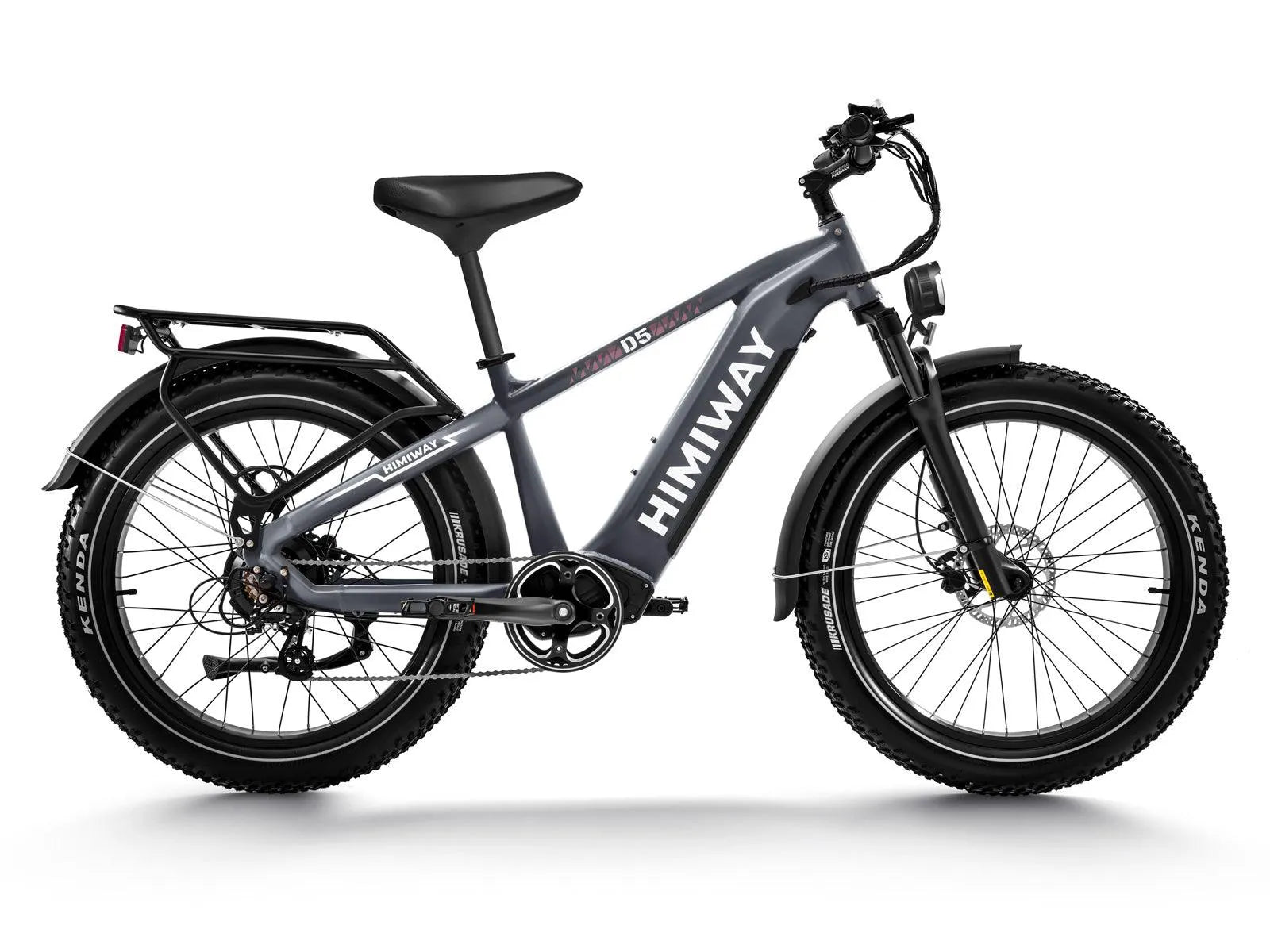
Himiway D5 / Zebra
- 750W brushless geared motor
- 48V 20Ah Samsung/LG battery
- 60–80 mile published range
- 26 × 4.0-inch Kenda fat tires
- 400 lb maximum payload
- Torque sensor and hydraulic brakes

Himiway D5 Pro
- 500W mid-drive motor
- 130Nm torque
- 960Wh Samsung/LG battery
- Up to 80 miles published range
- 400 lb maximum payload
- 26 × 4.0-inch Kenda fat tires
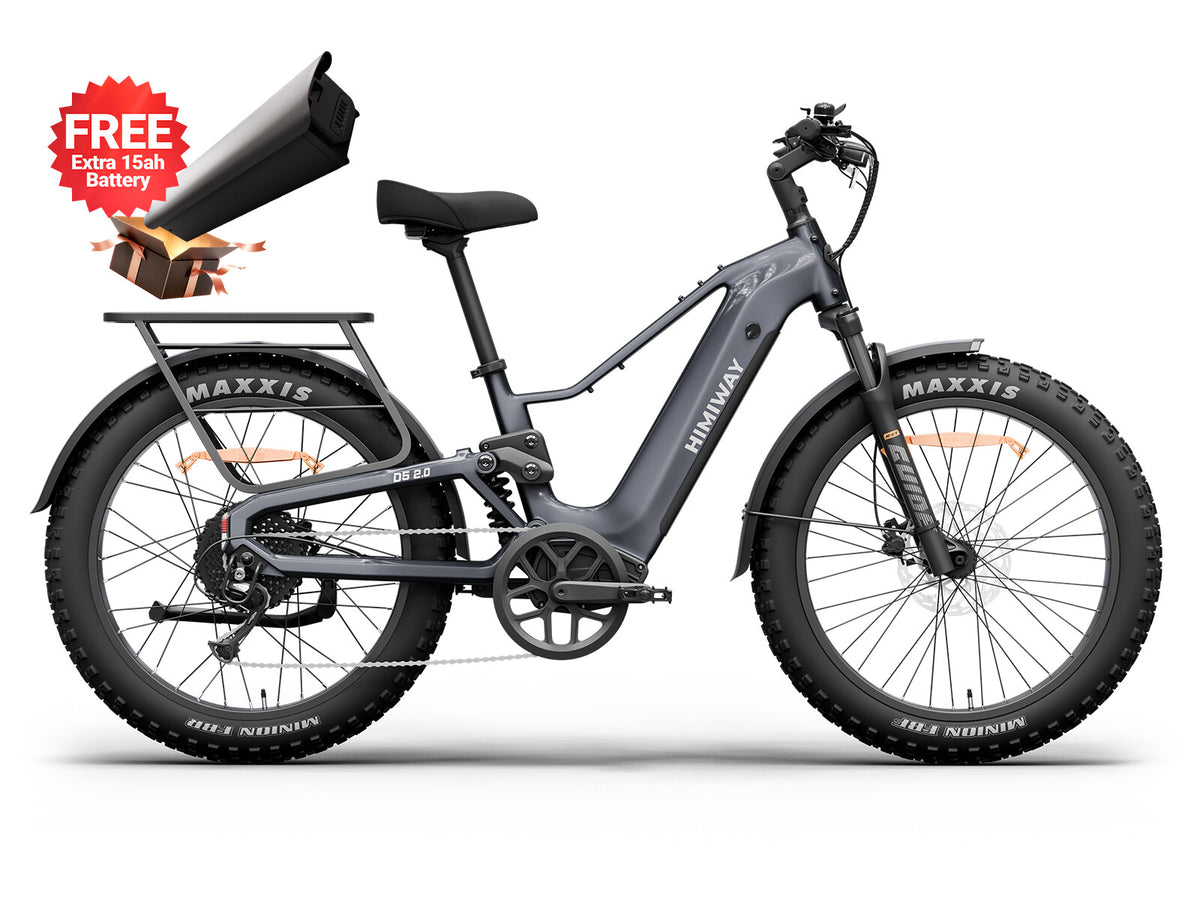
Himiway D5 2.0
- 750W geared hub motor
- 90Nm torque
- Full suspension design
- Torque/cadence sensor modes
- 400 lb payload for 26-inch model
- 15Ah battery configuration shown
Quick Answer: Is the Himiway D5 Electric Bike Worth Considering?
If your priority is an all-terrain fat tire e-bike with a substantial battery, wide tires and a high payload rating, the Himiway D5 is designed around exactly that use case.
The standard D5/Zebra uses a 750W geared hub motor and 48V 20Ah Samsung/LG battery, while the D5 Pro changes to a 500W mid-drive motor with 130Nm of claimed torque. The D5 2.0 takes a different approach, adding full suspension and switchable torque/cadence sensing.
- D5/Zebra — classic all-terrain fat-bike setup
- D5 Pro — mid-drive performance and hill-focused torque
- D5 2.0 — full-suspension comfort
- D5 ST — easier step-through access
- D5 2.0 20" — compact full-suspension configuration
Himiway D5 vs D5 Pro vs D5 2.0
This table makes the biggest differences easier to scan before you choose a model. Specifications and prices should be rechecked on the linked product page before purchase because Himiway can change configurations, promotions and availability.
| Specification | D5 / Zebra | D5 Pro | D5 2.0 |
|---|---|---|---|
| Published price | $1,499 | $1,899 | $1,999 |
| Motor | 750W geared hub | 500W mid-drive | 750W geared hub |
| Torque | Published D5 configuration | 130Nm | 90Nm |
| Battery | 48V 20Ah | 48V 20Ah / 960Wh | 48V 15Ah configuration |
| Published range | 60–80 miles | Up to 80 miles | Varies by configuration and riding conditions |
| Tires | 26 × 4.0" | 26 × 4.0" | Fat tires |
| Suspension | Front suspension | Front suspension | Full suspension |
| Payload | 400 lb | 400 lb | 400 lb for 26-inch configuration |
| Rating shown by Himiway | 4.8/5 | 4.7/5 | 4.9/5 |
| Best suited to | All-terrain fat-bike riding | Torque-focused riding | Comfort and rough terrain |
| See current offer | View D5 | View D5 Pro | View D5 2.0 |
Himiway D5 Electric Bike: Complete Buyer Guide
The Himiway D5 electric bike has become a popular search term because the D5 name is attached to several different configurations. That can make shopping confusing. Two bikes may both say “D5” while using different motors, suspension systems, batteries and frame designs.
The safest way to shop is to start with the type of riding you expect to do. If you want a traditional fat tire all-terrain e-bike, the D5/Zebra is the obvious configuration to investigate. If your priority is the response of a mid-drive system and high torque, the D5 Pro deserves a closer look. If comfort over rough surfaces is the main concern, the D5 2.0's full-suspension design changes the equation.
1. Himiway D5 Motor Performance
Motor wattage is one of the first numbers shoppers notice. The D5/Zebra uses a 750W brushless geared motor. The D5 Pro instead uses a 500W mid-drive motor, while Himiway lists 130Nm of torque for the Pro. The D5 2.0 uses a 750W geared hub motor with 90Nm of torque.
These numbers should not be interpreted as a simple “higher wattage wins” contest. Hub motors and mid-drive motors deliver their power differently. A mid-drive system can make particularly good sense for riders who spend a lot of time climbing or who want the motor to work through the bike's gearing.
On the other hand, a geared hub motor can provide a straightforward, familiar e-bike setup. For buyers who mainly want dependable electric assistance on pavement, gravel, recreational trails and mixed surfaces, the D5/Zebra's 750W configuration provides plenty of headline power.
2. Battery Capacity and Real-World Range
Battery capacity is arguably more useful than motor wattage when you're trying to understand how far an electric bike can travel. The standard D5/Zebra page lists a 48V 20Ah Samsung/LG battery and a stated range of 60–80 miles.
That range should not be treated as a guaranteed distance. Actual range depends on rider weight, terrain, wind, temperature, tire pressure, assistance level, speed, stop-and-go riding and other variables.
If you frequently ride hills, use the throttle heavily or carry a large load, expect real-world range to be lower than an idealized maximum. Conversely, a lighter rider using moderate pedal assist on relatively flat terrain can often extract considerably more distance from the same battery.
3. Why 26 × 4-Inch Fat Tires Matter
The D5/Zebra and D5 Pro use 26 × 4.0-inch fat tires. That width is a significant part of the bike's personality.
Wide tires provide a large contact patch and can help the bike feel stable on loose or uneven terrain. They are particularly attractive to riders who want to explore gravel, packed dirt, sand or other surfaces where a narrow commuter tire may not provide the same confidence.
The trade-off is rolling resistance and weight. A fat tire e-bike is not intended to feel like a lightweight road bicycle. If your daily commute consists almost entirely of smooth pavement and your biggest priority is efficiency, a lighter commuter e-bike may be more appropriate.
4. Himiway D5 Suspension
Suspension is another major separator within the D5 family.
The standard D5/Zebra uses a front suspension fork. The D5 Pro also uses front suspension. The D5 2.0 moves further toward comfort with a full-suspension frame design, including front and rear travel.
This difference becomes particularly important for riders who spend extended periods on rough roads, gravel paths or uneven trails. Full suspension can reduce the amount of vibration reaching the rider and help the tires maintain contact with uneven surfaces.
It also adds complexity, weight and cost. If your normal ride is smooth pavement, you may not need to pay specifically for full suspension.
5. Is the Himiway D5 Good for Heavy Riders?
One of the most notable specifications across the D5 family is the published payload capacity. Himiway lists a 400-lb maximum payload for the D5/Zebra and D5 Pro, while the D5 2.0 specifications also list a 400-lb payload for its 26-inch configuration.
Payload is not the same thing as rider weight. Payload can include the rider plus cargo and accessories, so buyers should consider the entire loaded bike rather than looking only at body weight.
If you plan to carry substantial cargo, check the exact model's rack capacity and the manufacturer's current instructions before purchase.
6. Himiway D5 for Tall Riders
Himiway currently lists a recommended rider-height range around 5'3" to 6'5" for the D5/Zebra and D5 Pro configurations. The D5 2.0 page also provides a broad fit range depending on the specific version.
Height alone should not determine fit. Leg length, riding position, standover clearance and preferred handlebar position all matter. If you're close to the upper or lower end of the published range, review the geometry and size guide before ordering.
7. D5 vs D5 Pro: Which Configuration Is Different?
The D5 Pro is not simply a cosmetic upgrade to the standard D5. Its biggest mechanical difference is the mid-drive motor.
Himiway lists a 500W mid-drive motor with 130Nm of torque, a 960Wh Samsung/LG battery and up to 80 miles of range. It also uses a 9-speed Shimano Altus drivetrain compared with the standard D5's 7-speed setup.
For riders who specifically want mid-drive characteristics, those differences can be more important than the raw wattage number.
8. D5 vs D5 2.0: Comfort Is the Big Difference
The D5 2.0 takes the D5 concept toward comfort. Himiway lists a 750W, 90Nm geared hub motor, switchable torque/cadence sensing and full suspension.
The D5 2.0 is therefore especially interesting for riders who spend a lot of time on uneven surfaces or simply want more suspension between their body and the road.
The standard D5 can still be the more straightforward choice if you want a conventional fat tire setup and do not need rear suspension.
9. Is the Himiway D5 Good for Commuting?
Yes, the D5 can be used for commuting, but whether it is the right commuter depends on the route.
A rider commuting across rough roads, broken pavement, gravel shortcuts or mixed terrain may appreciate the fat tires and suspension. The integrated lighting, hydraulic braking and substantial battery capacity also make the platform practical for longer recreational and utility rides.
But the D5 is a large e-bike. If you must carry your bike upstairs every day, place it inside a small apartment or lift it onto a vehicle without assistance, its size and weight deserve careful consideration.
10. Himiway D5 Brakes and Safety Equipment
The D5/Zebra specifications list Tektro hydraulic brakes with 180mm rotors. The D5 Pro also lists Tektro hydraulic disc brakes with 180mm rotors.
Hydraulic disc brakes are valuable on a heavier fat tire e-bike because the braking system has to manage more moving mass than a lightweight conventional bicycle.
Braking performance still depends on rider behavior, terrain and maintenance. Always use appropriate protective equipment and follow local e-bike regulations.
11. D5 Weight: A Trade-Off Buyers Should Understand
Himiway lists the D5/Zebra at approximately 79 lb with battery, and the D5 Pro at the same listed weight. That's substantial compared with many lightweight city e-bikes.
The weight contributes to the bike's stable, heavy-duty character, but it also affects transportation and storage. A hitch rack designed for the bike's weight is often much more practical than trying to lift the bike onto a conventional lightweight carrier.
12. Who Should Buy the Himiway D5?
The D5 makes the most sense for riders who specifically want the combination of fat tires, strong electric assistance, long-range battery capacity and a high payload rating.
- All-terrain recreational riders
- Gravel and dirt-road riders
- Riders who want a large battery
- Heavier riders looking for a high payload rating
- RV and camping users
- Utility riders carrying gear
- Commuters dealing with poor road surfaces
- Riders who prefer a stable fat-bike platform
13. Who May Want Something Else?
The D5 is not automatically the ideal e-bike for everyone.
If your number-one priority is portability, a lighter folding e-bike may make more sense. If you mostly ride smooth roads at modest speeds, narrower tires can be more efficient. And if you specifically want full suspension, the D5 2.0 deserves consideration over the standard D5.
The key is to match the bike to your environment rather than buying based solely on motor wattage or a large range number.
Electric Bike Watts → HP & Speed Calculator
Enter a motor wattage to see its mechanical horsepower equivalent and an illustrative speed range. This is a comparison tool—not a guarantee of real-world speed.
Himiway D5 Pros and Considerations
Why Buyers Consider the D5
- Large 4-inch fat tires
- High published payload capacity
- Large battery options
- Hydraulic disc brakes
- Strong motor configurations
- All-terrain-oriented design
- Multiple D5 configurations to choose from
- Front or full suspension depending on model
Things to Consider Before Buying
- Large and heavy compared with lightweight e-bikes
- Fat tires can increase rolling resistance
- Actual range varies substantially by conditions
- Different D5 versions have materially different hardware
- Check local e-bike laws before riding
- Transportation may require a heavy-duty rack
- Published promotional prices can change
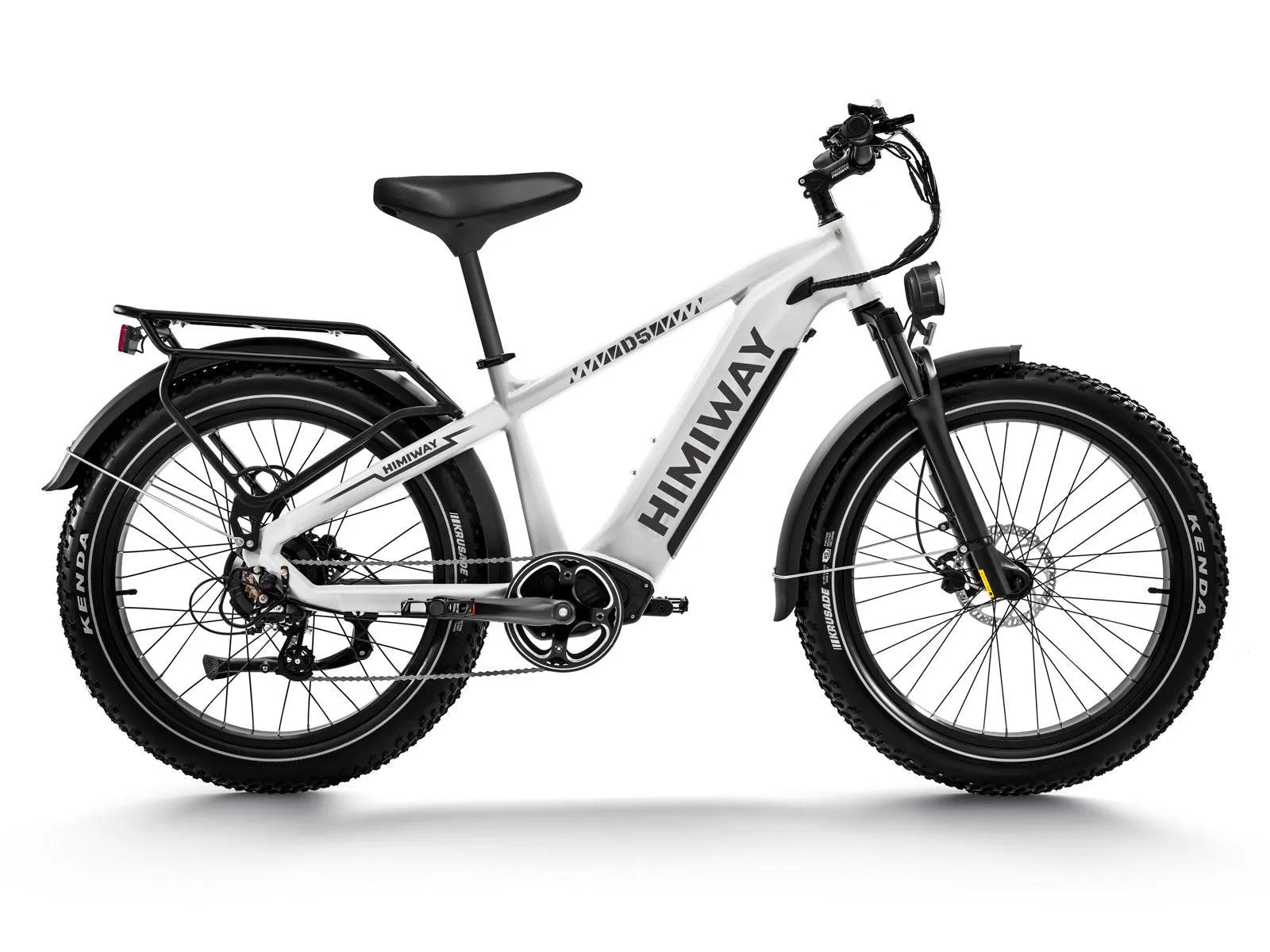
Built Around Stability and Utility
The D5's visual design tells you a lot about its intended purpose. This is not a minimalist city bicycle. The large tires, substantial frame, battery integration and rear rack compatibility point toward utility and all-terrain riding.
For a rider who wants to spend weekends exploring trails, ride through gravel roads or simply have a more planted bicycle for poor pavement, that design philosophy can be appealing.
Explore the D5 →Continue Your Himiway Research
If you're building a Himiway buying guide before purchasing, these related topics can help you compare models and understand the wider lineup.
How to Choose the Right Himiway D5
Choose the D5/Zebra if...
You want the traditional D5 fat-bike experience with a 750W geared hub motor, 48V 20Ah battery, 26 × 4.0-inch tires and a high published payload rating. It is the straightforward D5 configuration to investigate if all-terrain capability is your primary requirement.
Choose the D5 Pro if...
You specifically want a mid-drive motor and higher published torque. The D5 Pro uses a 500W mid-drive system with 130Nm of torque and a 960Wh battery according to Himiway's current product information.
Choose the D5 2.0 if...
Ride comfort is particularly important to you. Its full-suspension configuration and switchable torque/cadence sensing make it a distinct option within the D5 family.
Consider the D5 ST if...
You prefer easier mounting and dismounting. A step-through frame can be useful for riders who don't want to swing a leg over a conventional high-step frame.
Himiway D5 Electric Bike FAQ
Is the Himiway D5 a good electric bike?
The Himiway D5 is designed for riders who want a large fat-tire platform, substantial battery capacity, strong electric assistance and a high payload rating. Whether it is the right choice depends on your terrain, storage situation, desired comfort and transportation needs.
How fast is the Himiway D5?
Speed depends on the specific D5 configuration, settings, rider, terrain and local regulations. Himiway currently lists the D5 Zebra at 20+ mph and the D5 2.0 at up to 28 mph on its product information. Always check the exact model and local legal requirements.
What is the range of the Himiway D5?
Himiway lists a 60–80 mile range for the D5/Zebra configuration. Real-world range varies with rider weight, terrain, speed, assistance level, temperature, wind, tire pressure and other factors.
How much weight can the Himiway D5 carry?
Himiway lists a maximum payload of 400 lb for the D5/Zebra and D5 Pro. Payload includes the rider and cargo, so stay within the manufacturer's published limits for your exact configuration.
What is the difference between the Himiway D5 and D5 Pro?
The biggest mechanical difference is the motor system. The D5/Zebra uses a 750W geared hub motor, while the D5 Pro uses a 500W mid-drive motor with 130Nm of published torque. The Pro also uses a 960Wh battery and a 9-speed drivetrain.
Is the Himiway D5 good for heavy riders?
The D5 family is specifically marketed with high payload capability. Himiway lists a 400-lb payload on the D5/Zebra and D5 Pro. Always consider rider plus cargo and follow the exact model's current limits.
Is the Himiway D5 good for hills?
The D5 family is designed with substantial motor assistance, and the D5 Pro in particular uses a mid-drive motor with 130Nm of claimed torque. Actual hill performance depends on gradient, rider weight, gearing, battery state and riding mode.
Is the D5 2.0 better for rough roads?
The D5 2.0 is specifically configured with full suspension, making it the D5-family configuration to investigate if ride comfort over uneven surfaces is a major priority.
Should I buy the D5 or D5 2.0?
Compare your priorities. The D5/Zebra is a conventional all-terrain fat-bike configuration, while the D5 2.0 adds full suspension, switchable torque/cadence sensing and a different 750W/90Nm motor configuration. Check the current prices and specifications before deciding.
Ready to Check the Himiway D5?
The D5 family has several configurations, so the smartest next step is to check the current model, color, promotion, stock status and included accessories directly on Himiway's product page.
Check Current Himiway D5 Offer →Offers, inventory, specifications and included accessories can change. Verify the current product page before ordering.