

Himiway eBike Price Guide 2026: Models & Deals
Himiway eBike Price: Complete 2026 Buying Guide
Looking for a Himiway eBike price that matches your budget, riding style, range requirements and terrain? We compare the current Himiway lineup, including the D5 Zebra, D5 Pro, D5 2.0, A7 and D7 Pro, so you can see exactly what you get for your money.
Check Current Himiway Prices →How Much Does a Himiway eBike Cost?
Himiway eBike prices vary significantly by model. Current listings put the Himiway D5 Zebra around $1,499, while the D5 Pro and A7 are around the $1,999 range. The D7 Pro sits at the premium end at about $3,999. The D5 2.0 is also listed around $1,999.
That means the right question is not simply "what is the cheapest Himiway eBike?" Instead, compare the motor, battery capacity, suspension, tire size, payload, riding position and intended terrain against the price.
Himiway eBike Prices & Top Models
These are some of the most relevant Himiway models to compare when researching Himiway eBike price. The lineup ranges from practical all-terrain bikes to full-suspension mountain machines.
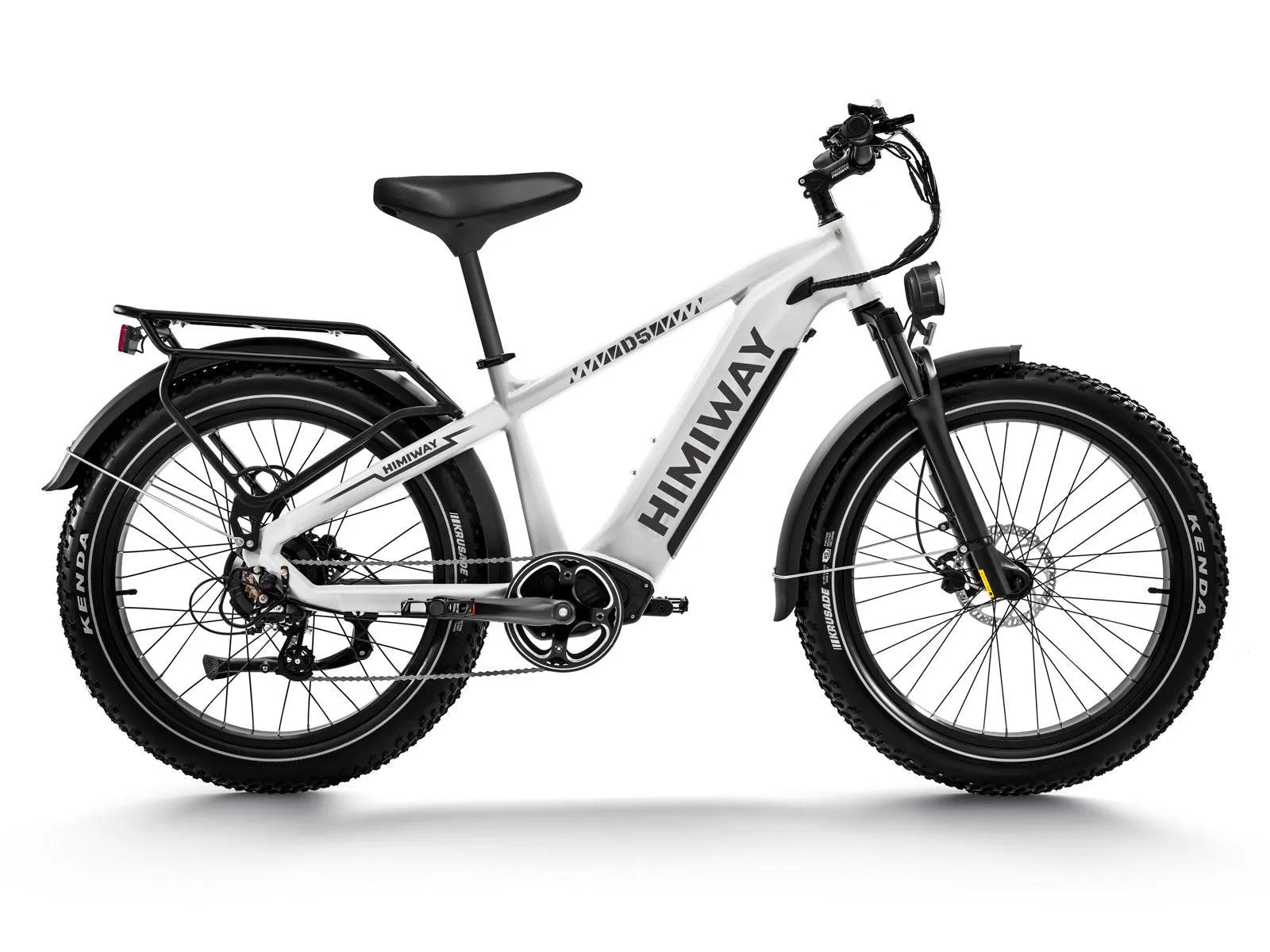
Himiway D5 Zebra
- All-terrain fat tire design
- 960Wh Samsung/LG battery
- Up to 60 miles electric / 80+ pedal assist claimed
- 400 lb payload capacity
- Designed for commuting and mixed terrain

Himiway D5 Pro
- Torque-sensing mid-drive motor
- 130Nm torque claimed
- 26 × 4.0-inch fat tires
- Hydraulic disc brakes
- 400 lb payload capacity

Himiway A7
- Full-suspension commuter design
- Step-through style frame
- Torque and cadence modes
- Smart Auto Mode
- MIK rear rack compatibility

Himiway D7 Pro
- 160Nm torque claimed
- 26 × 4.8-inch super-fat tires
- Four-bar rear suspension
- 150mm inverted air fork
- 400 lb payload capacity
Why Himiway pricing can look confusing
Himiway frequently sells several configurations and generations at the same time. Promotional pricing, model updates, step-through versions, battery configurations and limited-time offers can change the price displayed on the store.
For that reason, treat the prices in this guide as a comparison snapshot, not a permanent MSRP. Always click through before buying to verify the exact configuration, included accessories, shipping terms and current promotion.
Himiway eBike Price Comparison
If you're comparing Himiway eBike prices, the table below gives you a faster way to narrow the list before reading the detailed buying guide.
| Model | Price | Motor | Battery | Range | Top Speed | Best For | |
|---|---|---|---|---|---|---|---|
| D5 Zebra | $1,499 | 750W | 960Wh | Up to 80 mi* | 20+ mph | Value / all-terrain | View |
| D5 Pro | $1,999 | 500W mid-drive | 960Wh | Up to 80 mi* | 20+ mph | Hills / mixed terrain | View |
| D5 2.0 | $1,999 | 750W | 15Ah | Model dependent | Model dependent | Comfort / fat tire | View |
| A7 | $1,999 | 750W | Model dependent | Up to 70 mi* | Model dependent | Commuting | View |
| D7 Pro | $3,999 | 1000W mid-drive | 960Wh | Up to 80 mi* | 28 mph | Extreme off-road | View |
*Manufacturer-listed maximum ranges can vary substantially with rider weight, terrain, wind, temperature, tire pressure, assist level and riding conditions.
Himiway Motor Watts → Horsepower Calculator
Motor wattage is one of the first specifications shoppers compare, but watts and horsepower are not identical measurements. Use this simple calculator to convert motor wattage into its mechanical horsepower equivalent.
Himiway eBike Price: What Are You Actually Paying For?
Searching for "Himiway eBike price" usually means you have already moved beyond the basic question of whether an electric bike is worth buying. You are now comparing specific models, battery sizes, motors, comfort features, range claims and the amount of performance you receive for your budget.
That is important because two electric bikes can have similar-looking price tags while being designed for completely different riders. A commuter may value suspension, an upright riding position and rack compatibility. A trail rider may care more about torque, suspension travel, tire width and hydraulic braking. A heavier rider may prioritize payload capacity and frame construction.
1. Himiway eBike price under $1,500
At around $1,500, the Himiway D5 Zebra is one of the most interesting price points in the current lineup. Its listed price is substantially below the D5 Pro and D7 Pro while retaining a large battery and fat-tire platform.
This price bracket is particularly relevant to buyers who want a serious all-terrain electric bike without immediately moving into the $2,000+ category. The D5's 960Wh battery and 750W motor give the bike a specification profile aimed at longer rides and mixed terrain.
The important trade-off is that a lower purchase price does not mean the bike is ideal for every type of riding. Riders looking for advanced mid-drive performance may want to compare the D5 Pro before purchasing.
2. Himiway eBike price around $2,000
The $2,000 range is where the Himiway lineup becomes particularly interesting. The D5 Pro, D5 2.0 and A7 all sit around this level, but they serve different purposes.
The D5 Pro emphasizes all-terrain performance with a torque-sensing mid-drive system, 26 × 4-inch fat tires and a 960Wh battery. The A7 is oriented more toward comfortable commuting and everyday utility, with full suspension and a commuter-focused frame.
Meanwhile, the D5 2.0 focuses heavily on comfort and full-suspension fat-tire riding. That makes the model comparison more important than simply choosing whichever model has the biggest motor number.
3. Himiway eBike price around $4,000
The D7 Pro occupies the premium end of this comparison at approximately $3,999. It is built around a 1000W mid-drive motor, 160Nm claimed torque, 960Wh battery, 26 × 4.8-inch super-fat tires and a sophisticated suspension system.
At this level, you are not simply paying for an electric bicycle to get around town. You are paying for a platform intended to handle demanding terrain, heavier loads and aggressive off-road use.
Whether that extra cost makes sense depends almost entirely on how you ride. Someone who spends most of their time on paved bike paths may not use the D7 Pro's additional capability. A rider who regularly tackles steep trails, loose surfaces, snow or rough terrain has a very different set of requirements.
4. Battery size matters more than many shoppers realize
When comparing Himiway eBike prices, battery capacity should be near the top of your checklist. Battery capacity is normally expressed in watt-hours, or Wh.
A larger battery generally provides more stored energy, although actual range depends on many variables. Rider weight, hills, wind, temperature, tire pressure, riding speed and pedal-assist level can all change the distance achieved from a charge.
This is why manufacturer range figures should be treated as maximum or test-condition figures rather than guaranteed everyday mileage.
5. Mid-drive vs hub motor
Another major difference between Himiway models is the motor architecture. Hub motors drive the wheel directly, while mid-drive motors transmit power through the bicycle drivetrain.
Mid-drive systems can provide a natural-feeling pedal experience and can be particularly useful on hills because the motor works through the bicycle's gearing. The D5 Pro and D7 Pro are examples of Himiway models built around mid-drive configurations.
Hub-motor systems can also be very effective for commuting and general recreational riding. The A7 configuration shown on Himiway's current page is positioned as a comfortable commuter model.
6. Why fat tires affect the buying decision
Fat tires are one of the most recognizable characteristics of many Himiway electric bikes. Wider tires can provide additional traction and stability over surfaces such as gravel, sand and loose ground.
However, bigger tires also add weight and rolling resistance. For a rider who spends almost all of their time on smooth pavement, a lighter commuter design can make more sense than a very wide fat-tire platform.
The D5 family is therefore particularly interesting for buyers who want one bike capable of handling both ordinary roads and less predictable surfaces.
7. Suspension and comfort
Suspension is another feature that can justify moving up the Himiway price ladder. Full suspension can reduce the impact of potholes, roots, rocks and rough surfaces.
For daily commuting, suspension can also make poor pavement more comfortable. But suspension adds components, weight and complexity, so buyers should consider whether their normal routes actually benefit from it.
8. Payload capacity
Payload capacity is especially important for larger riders or anyone carrying groceries, equipment, child seats, trailers or other cargo.
Several Himiway models in this guide advertise a 400 lb payload capacity. That specification includes more than simply the rider, so buyers should consider the combined weight of the rider and cargo when evaluating the number.
9. Which Himiway is better for commuting?
For primarily urban riding, look closely at the A7. Its full-suspension commuter design, upright-oriented setup, rack compatibility and comfort features make it fundamentally different from the D7 Pro's extreme off-road focus.
The D5 can also make sense for commuters who want more tire volume and all-terrain capability. The decision comes down to whether your commute is primarily smooth pavement or a mixture of roads, gravel and trails.
10. Which Himiway is better for trails?
Trail riders should pay particular attention to the D5 Pro and D7 Pro. Their mid-drive systems, wide tires, hydraulic brakes and suspension configurations are designed around more demanding terrain.
The D7 Pro goes considerably further in terms of motor output, tire width and suspension hardware, which is reflected in its significantly higher price.
11. Is the cheapest Himiway eBike automatically the best value?
Not necessarily. Value means how well the bike matches your actual requirements, not simply how low the purchase price is.
If a $1,499 bike has everything you need, paying another $1,500 for a premium mountain model may provide little practical benefit. Conversely, if you regularly ride steep terrain, carry heavy loads or ride rough trails, buying based solely on the lowest price can result in a bike that does not fit your use case.
12. Look at the complete purchase price
When comparing prices, remember that accessories can change the total amount you spend. Depending on the model and promotion, you may consider adding a helmet, lock, rack, basket, pannier, spare battery or other equipment.
A lower-priced bike that requires several upgrades may ultimately cost closer to a more fully equipped model. Before checkout, compare what is included in the current promotion and what you would otherwise need to buy separately.
13. Watch for changing promotions
Himiway's website can show limited-time discounts and promotional bundles. This means the Himiway eBike price you see today may not be identical to the price you see later.
The safest approach is to use this guide for narrowing your choice and then verify the current product page before completing the purchase.
14. Don't choose based on watts alone
A common mistake is assuming the highest wattage automatically means the best electric bike. Motor design, torque, gearing, controller behavior, battery capacity, tires and suspension all influence how an eBike feels.
A 500W mid-drive with substantial torque can have a very different riding character from a 750W hub motor. That is why a complete specification comparison is much more useful than a single wattage number.
15. Consider rider height and ergonomics
Fit matters just as much on an electric bike as it does on a conventional bicycle. Check the manufacturer's recommended rider height, standover height, seat adjustment and handlebar position before buying.
A bike that technically fits your height may still feel uncomfortable if the riding position does not suit your body or flexibility.
More Himiway Buying Guides
Which Himiway eBike Should You Buy?
| Your priority | Model to investigate | Why |
|---|---|---|
| Lower purchase price | D5 Zebra | Current listing is around $1,499 with a large battery. |
| Mid-drive all-terrain riding | D5 Pro | 500W mid-drive, torque sensing and fat tires. |
| Comfortable city riding | A7 | Full suspension and commuter-focused design. |
| Comfort + fat tires | D5 2.0 | Full suspension, 750W platform and fat-tire setup. |
| Maximum off-road hardware | D7 Pro | 1000W mid-drive, 160Nm claimed torque and super-fat tires. |
Himiway eBike Price Frequently Asked Questions
How much does a Himiway eBike cost?
What is the cheapest Himiway eBike?
Is Himiway D5 Zebra worth considering?
How much is the Himiway D5 Pro?
How much is the Himiway D7 Pro?
Which Himiway eBike is best for commuting?
Does a larger Himiway battery mean more range?
Are Himiway eBikes good for hills?
Should I buy a Himiway eBike during a sale?
Where can I check the current Himiway eBike price?
Check Today's Himiway eBike Prices
Himiway promotions and inventory can change, so check the live collection before making your final decision. Compare the D5, D5 Pro, D5 2.0, A7 and D7 Pro against your budget and riding requirements.
See Current Himiway Deals →Prices, discounts, specifications, inventory and promotional offers are subject to change.