

Himiway Zebra eBike Review: Is It Worth It?
Himiway Zebra eBike Review: Is This 750W Fat-Tire eBike Still Worth Buying?
The Himiway Zebra eBike has become one of the most recognizable long-range fat-tire electric bikes in its price class. But with newer Himiway models now available, is the Zebra still a smart buy? We break down its motor, 960Wh battery, range, tires, brakes, payload, comfort, real-world use cases, alternatives and value before you buy.
Best Himiway Zebra Options to Consider
The original Himiway Zebra name now appears on Himiway's current site as the D5 (Zebra). There is also a step-through D5 ST version and a more premium D5 Pro, formerly known as the Zebra Pro.
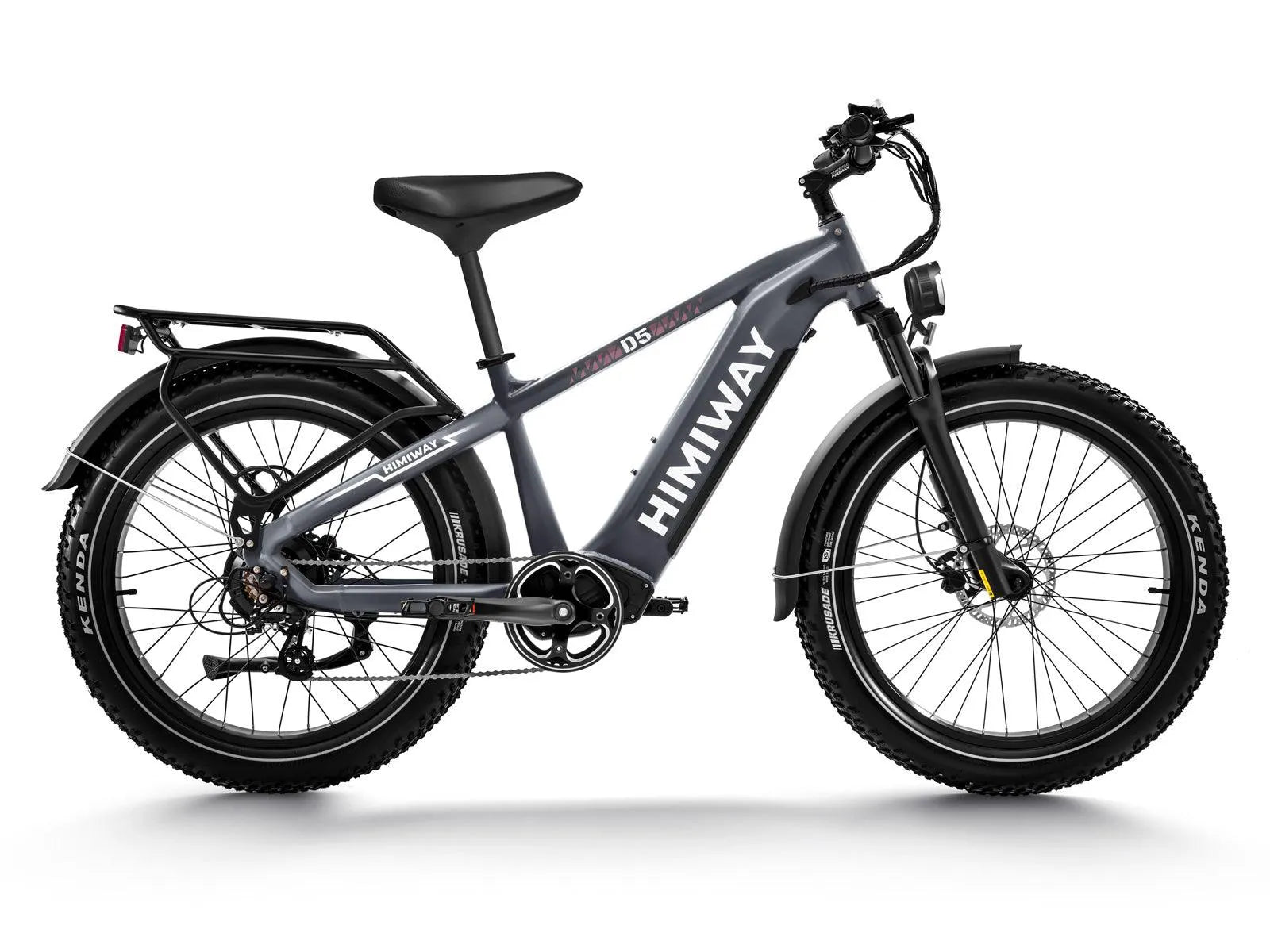
Himiway Zebra / D5
Our best-value Zebra pick. The current D5 Zebra combines a 750W geared motor, 960Wh Samsung/LG battery, 26×4.0 fat tires, torque sensing and a 400-lb payload rating.
- 750W brushless geared motor
- 960Wh Samsung/LG battery
- 60–80 mile claimed range
- 26×4.0 Kenda fat tires
- Shimano Altus 7-speed drivetrain
- Tektro hydraulic disc brakes
- 400-lb maximum payload

Himiway Zebra ST
Best for easier mounting. The Zebra ST uses the same general 750W/960Wh all-terrain concept while offering a step-through frame geometry.
- 750W motor
- 960Wh Samsung/LG battery
- Up to 80 miles claimed range
- 400-lb payload
- Hydraulic brakes
- 26×4.0 fat tires
- Recommended for riders approximately 5'1"–6'5"

D5 Pro / Zebra Pro
Best performance upgrade. The D5 Pro is the successor-style premium Zebra option, adding a 500W mid-drive motor, torque sensing, 9-speed Shimano drivetrain and a 960Wh battery.
- 500W mid-drive motor
- 130Nm claimed torque
- 960Wh Samsung/LG battery
- Up to 80 miles claimed range
- 26×4.0 Kenda tires
- 9-speed Shimano drivetrain
- 400-lb payload capacity
Quick Answer: Is the Himiway Zebra eBike Worth It?
Yes — especially if you want a powerful, long-range fat-tire eBike without moving into a $3,000+ price bracket.
The Himiway Zebra is particularly attractive for riders who want stability, battery capacity, wide tires and a high payload rating. It is not a lightweight city bicycle, however. At approximately 79 lb with the battery, the Zebra is designed around capability rather than minimal weight.
- Choose the Zebra/D5 for the best value.
- Choose the Zebra ST if step-through access is more important.
- Choose the D5 Pro if you want mid-drive performance and a more premium drivetrain.
- Choose another Himiway model if your priority is a lightweight, road-focused commuter.
Himiway Zebra eBike Specs at a Glance
| Specification | Himiway Zebra / D5 |
|---|---|
| Motor | 750W brushless geared hub motor |
| Battery | 48V 20Ah Samsung/LG — 960Wh |
| Claimed Range | 60–80 miles |
| Top Speed | 20+ mph listed |
| Tires | Kenda 26 × 4.0 fat tires |
| Front Suspension | 95mm travel suspension fork |
| Brakes | Tektro hydraulic disc brakes, 180mm rotors |
| Drivetrain | Shimano Altus 7-speed |
| Throttle | Thumb throttle |
| Sensors | Torque, speed and brake sensors |
| Bike Weight | 79 lb with battery |
| Maximum Payload | 400 lb |
| Recommended Rider Height | Approximately 5'3"–6'5" |
Himiway Zebra eBike Real Product Images
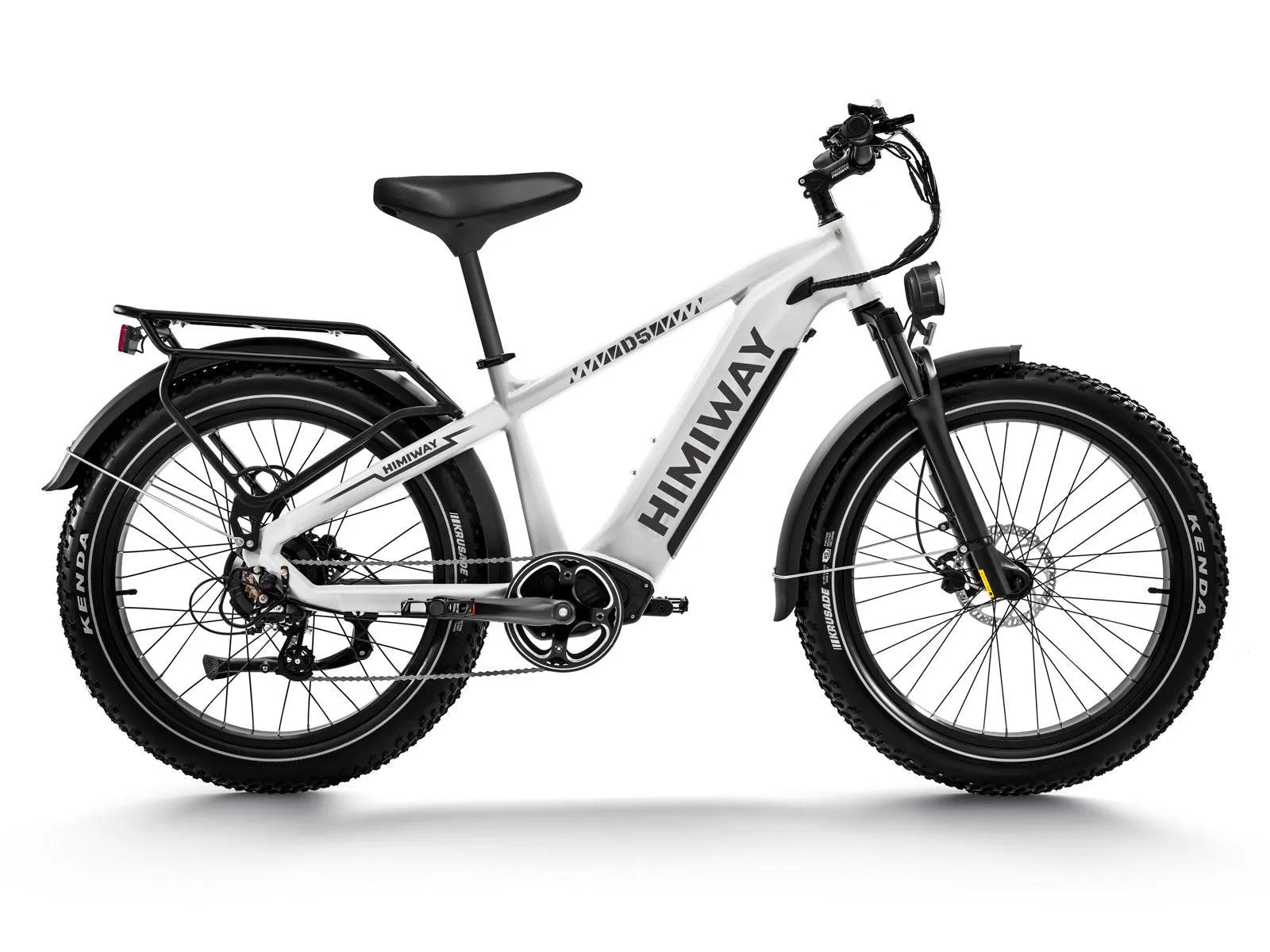
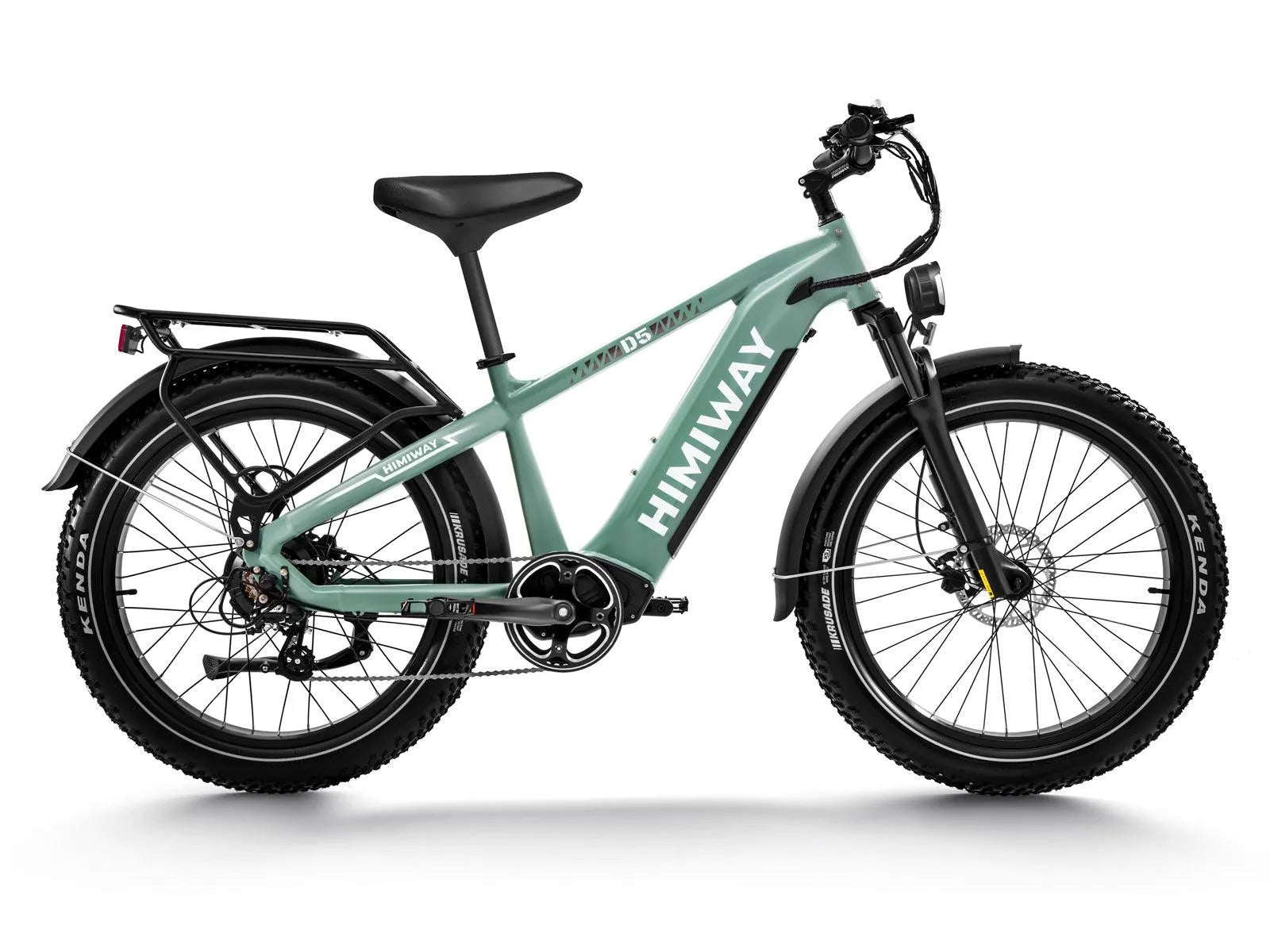
These are real Himiway product and lifestyle images served from Himiway's official CDN rather than generic stock photography.




Himiway Zebra Motor Power Calculator
Convert motor watts to approximate horsepower and see an educational speed estimate. This is not a manufacturer performance test and should not be interpreted as a guaranteed top speed.
Himiway Zebra eBike Review
The Himiway Zebra occupies an interesting position in the electric-bike market. It is not trying to be a featherweight road eBike. Instead, Himiway built the Zebra around the idea of a dependable, high-capacity fat-tire machine that can handle commuting, recreation, gravel, rough pavement and moderate off-road use.
That philosophy is immediately obvious when you look at the numbers. The current D5 Zebra uses a 750W geared motor, a 960Wh Samsung/LG battery, 26×4.0 Kenda tires and a 400-lb maximum payload rating.
The combination makes the Zebra particularly interesting for riders who do not want a tiny battery or narrow tires. It is also one reason the bike is relatively heavy.
750W Motor: Is It Powerful Enough?
For everyday riding, 750W is substantial power. The Zebra's geared hub motor is designed to provide strong acceleration and assistance while keeping the drivetrain relatively straightforward.
The important thing to understand is that motor wattage alone does not determine how an eBike feels. Controller output, gearing, battery voltage, rider weight, terrain and tire pressure all affect performance.
The Zebra's torque sensor is another important part of the package. Rather than relying only on a cadence-style on/off signal, a torque sensor can make assistance feel more connected to rider effort.
960Wh Battery: One of the Zebra's Biggest Advantages
The 960Wh battery is arguably the most compelling feature of the Himiway Zebra.
Battery capacity is measured in watt-hours. A 48V × 20Ah configuration produces approximately 960Wh of nominal energy capacity.
Himiway currently lists a 60–80 mile range for the D5 Zebra, with the company explaining that actual range depends on factors such as rider weight, incline and pedal-assist level.
That distinction matters. An advertised maximum range should never be treated as a guaranteed distance.
If you ride aggressively, use high assist levels, climb hills frequently or carry heavy cargo, expect substantially different results from the idealized maximum.
Can the Himiway Zebra Really Go 80 Miles?
It can reach the advertised maximum under favorable conditions, but most riders should think about range as a variable rather than a fixed number.
Lower speeds, moderate pedal assistance, smooth pavement, correct tire pressure and lighter loads generally help conserve battery energy.
Higher speeds, aggressive throttle use, hills, soft tires, cold temperatures and heavier loads can reduce range.
The practical takeaway is simple: the Zebra has a large battery reserve, which is one of the reasons it works well for longer recreational rides and utility use.
26×4.0 Fat Tires: Why They Matter
Fat tires fundamentally change the personality of an eBike.
The Zebra uses 26×4.0 Kenda tires. Compared with a conventional commuter eBike tire, that creates a much larger contact patch and more cushioning from the tire itself.
On gravel, packed dirt, rough pavement and loose surfaces, this can make the bike feel stable and planted.
There is a tradeoff, though. Wide tires add rolling resistance and contribute to the Zebra's substantial overall weight.
If 95% of your riding is smooth pavement, a narrower commuter bike may be faster and easier to maneuver. If your routes regularly include rough surfaces, the Zebra's tires become much more valuable.
Suspension: Better for Rough Roads
Himiway lists a 95mm-travel front suspension fork on the current Zebra.
That does not turn the Zebra into a dedicated downhill mountain bike, but it can significantly improve comfort when dealing with potholes, gravel, broken pavement and uneven trails.
Combined with the large-volume tires, the suspension contributes to the bike's forgiving ride quality.
Hydraulic Brakes
Braking is especially important on a heavy electric bike.
The Zebra uses Tektro hydraulic disc brakes with 180mm rotors front and rear. Hydraulic brakes generally offer strong braking performance with less hand effort than basic mechanical systems.
Riders carrying cargo or operating on hills should consider braking hardware just as seriously as motor power.
400-Lb Payload: Why It Matters
Himiway lists a maximum payload of 400 lb for the Zebra.
Payload capacity is not simply a statistic for larger riders. It also matters if you regularly carry groceries, camping equipment, panniers, racks or other gear.
The Zebra's frame and overall configuration therefore make it useful as more than a recreational bicycle.
Is the Himiway Zebra Good for Commuting?
Yes, but it depends on the commute.
If your commute includes rough roads, poor pavement, gravel paths, hills or long distances, the Zebra can make a lot of sense.
If you need to carry the bike upstairs every day or frequently lift it into a small vehicle, the approximately 79-lb weight becomes a much bigger consideration.
In other words, the Zebra is an excellent capability-focused commuter, but it is not the ideal lightweight urban bicycle.
Is the Himiway Zebra Good for Hunting and Trails?
The wide tires, high payload, large battery and suspension make the Zebra attractive for recreational trail riding and utility applications.
It is particularly well suited to dirt roads, gravel, forest paths and other moderate off-road surfaces.
However, riders should distinguish between an all-terrain fat eBike and a purpose-built technical mountain bike. The Zebra is designed primarily as a versatile utility and all-terrain machine.
How Heavy Is the Himiway Zebra?
Himiway lists the current D5 Zebra at 79 lb with the battery.
That is heavy compared with lightweight road-oriented eBikes, but it is understandable considering the 960Wh battery, 26×4.0 tires, suspension, large frame and high payload capability.
If you plan to store the bike inside an apartment, transport it on a hitch rack or lift it regularly, factor this into your buying decision.
What Makes the Zebra Different From Cheap Fat-Tire eBikes?
The biggest difference is not necessarily the motor label. The overall package matters.
The Zebra combines a large Samsung/LG battery, torque sensing, hydraulic brakes, Shimano gearing, branded Kenda tires, suspension and a substantial payload rating.
That gives it a more complete specification than many entry-level fat-tire eBikes that focus mainly on putting a large motor and battery on a basic frame.
Himiway Zebra Pros and Cons
✓ What We Like
- Large 960Wh battery.
- 750W geared motor.
- Torque sensor.
- 26×4.0 fat tires.
- Hydraulic disc brakes.
- Shimano 7-speed drivetrain.
- 400-lb payload rating.
- Long claimed range.
- Useful for mixed terrain.
- Strong value at current promotional pricing.
△ What to Consider
- Approximately 79 lb with battery.
- Fat tires create more rolling resistance.
- Not a lightweight road eBike.
- Large frame can be harder to transport.
- Maximum range is dependent on riding conditions.
- Newer D5 Pro offers a more advanced mid-drive setup.
- Local eBike regulations still apply.
Himiway Zebra vs Zebra ST vs D5 Pro
The biggest decision is whether you want the value-oriented D5 Zebra, the step-through ST configuration or the more advanced D5 Pro.
| Feature | Himiway Zebra / D5 | Zebra ST / D5 ST | D5 Pro / Zebra Pro |
|---|---|---|---|
| Best For | Best overall value | Easy mounting | Performance upgrade |
| Current Listed Price | $1,499 | $1,499 | $1,899 |
| Motor | 750W geared hub | 750W geared hub | 500W mid-drive |
| Battery | 960Wh | 960Wh | 960Wh |
| Claimed Range | 60–80 mi | Up to 80 mi | Up to 80 mi |
| Tire Size | 26×4.0 | 26×4.0 | 26×4.0 |
| Drivetrain | Shimano Altus 7-speed | Shimano 7-speed | Shimano Altus 9-speed |
| Torque Sensor | Yes | Yes | Yes |
| Payload | 400 lb | 400 lb | 400 lb |
| Editor Rating | 4.7/5 | 4.7/5 | 4.7/5 |
Himiway Zebra vs D5 Pro: Which Should You Buy?
This is probably the most important comparison for shoppers who are serious about the Zebra.
The standard Zebra/D5 is the value play. The D5 Pro is the performance play.
The D5 Pro uses a 500W mid-drive motor with Himiway claiming 130Nm of torque, while the standard D5 uses a 750W geared hub motor. The Pro also moves to a 9-speed Shimano drivetrain.
For riders who spend significant time climbing hills or want a more natural torque-sensing pedaling experience, the D5 Pro can justify its higher price.
But if your primary goal is simply to get a capable long-range fat-tire eBike for the lowest possible price, the standard Zebra is hard to ignore at its current listed price.
Our buying recommendation
Buy the Zebra/D5 if value is your priority.
Buy the Zebra ST if step-through access is important.
Upgrade to the D5 Pro if you specifically want
mid-drive performance, 130Nm claimed torque and a 9-speed drivetrain.
Himiway Zebra Buying Guide
1. Check Your Rider Weight
The Zebra's 400-lb maximum payload rating gives it a substantial margin for larger riders and cargo. Remember that payload includes the rider and anything else carried on the bike.
2. Think About Your Terrain
Flat pavement, gravel, hills, sand and muddy trails all require different amounts of motor and battery energy.
If your riding is almost entirely on smooth roads, you may not need 4-inch tires. If you frequently ride on gravel, dirt or rough surfaces, those tires become much more useful.
3. Do You Need a Step-Through Frame?
The Zebra ST can be the smarter choice for riders who prioritize easier mounting and dismounting.
The standard Zebra uses a conventional high-step frame and may appeal more to riders who prefer its frame geometry.
4. Consider Storage and Transportation
A 79-lb electric bike requires more planning than a traditional bicycle. Before ordering, consider where you will store it and how you will transport it.
5. Don't Buy Based on Range Alone
Battery capacity matters, but range is a combination of battery, efficiency, speed, rider weight, terrain, wind, tire pressure and assistance level.
6. Check Local eBike Rules
Electric-bike classifications and speed rules vary by location. Before riding on public roads or trails, check the regulations that apply where you live.
Who Is the Himiway Zebra Best For?
| Rider Type | Recommendation | Why |
|---|---|---|
| Long-distance recreational rider | Excellent fit | Large 960Wh battery and wide tires. |
| Larger rider | Excellent fit | 400-lb maximum payload rating. |
| Gravel rider | Excellent fit | 26×4.0 fat tires and suspension fork. |
| City commuter | Good fit | Powerful and comfortable, but heavier than many commuter bikes. |
| Apartment dweller | Consider carefully | 79-lb weight can make stairs difficult. |
| Lightweight road cyclist | Look elsewhere | Fat tires and high weight are unnecessary for some road riders. |
| Technical mountain biker | Consider D5 Pro or MTB | The Zebra is an all-terrain utility eBike, not a dedicated downhill MTB. |
More Himiway eBike Guides
Build a stronger Himiway topical cluster by connecting this Zebra guide to your model-specific reviews and broader electric-bike guides.
Check the Current Himiway Zebra Offer Before Buying
The current Himiway page shows the D5 Zebra at a promotional price below its displayed original price. Himiway also periodically runs limited-time campaigns and accessory promotions, so the price or included extras can change.
Rather than relying on an old price from a review, check the live product page immediately before purchasing.
Check Today's Zebra Deal →Himiway Zebra eBike FAQ
Is the Himiway Zebra eBike worth buying?
How much does the Himiway Zebra cost?
How fast is the Himiway Zebra?
How far can the Himiway Zebra go on one charge?
What battery does the Himiway Zebra use?
Is the Himiway Zebra good for off-road riding?
What is the Himiway Zebra payload capacity?
Is the Himiway Zebra heavy?
Himiway Zebra vs Zebra ST — which is better?
Himiway Zebra vs Zebra Pro — which should I buy?
Should You Buy the Himiway Zebra?
If you want a long-range, high-capacity fat-tire eBike with a 750W motor, 960Wh battery, hydraulic brakes, suspension and a 400-lb payload rating, the Himiway Zebra remains a compelling value.
Our 4.7/5 RenovoMotors Editor Rating reflects the combination of capability, range, equipment and current value — while also accounting for the bike's substantial weight.
Check Himiway Zebra Price & Availability →RenovoMotors Editor Rating: 4.7/5 • Affiliate link • Price and availability subject to change.