

Himiway Zebra Electric Bike Review: Specs & Range
Himiway Zebra Electric Bike Review: 750W Power, 960Wh Battery & 80-Mile Range
Looking for a powerful fat-tire e-bike that can handle commuting, gravel roads, hills and weekend adventures? The Himiway Zebra electric bike — also sold as the Himiway D5 — combines a 750W geared motor, 960Wh Samsung/LG battery, torque sensing and 26 × 4.0-inch fat tires into one substantial all-terrain platform.
The bigger question is whether the Zebra is the right Himiway for your riding style. In this guide, we'll break down the motor, battery, range, tires, brakes, payload, comfort, real-world use cases and alternatives before you buy.
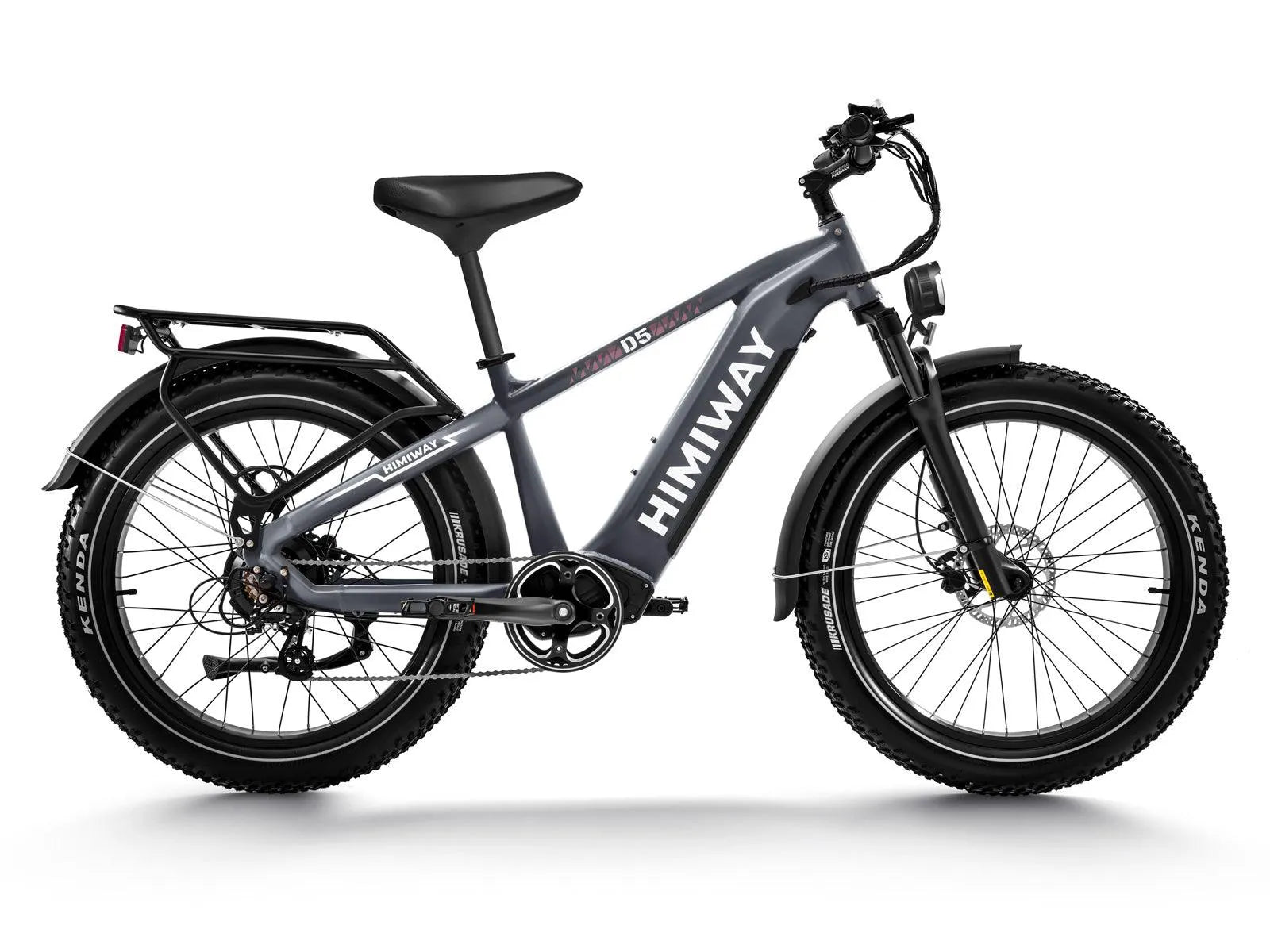
Himiway Zebra Buying Options
The standard Zebra/D5 is the main conversion product on this page. We have also included the step-through Zebra ST because frame style can make a major difference in everyday usability.
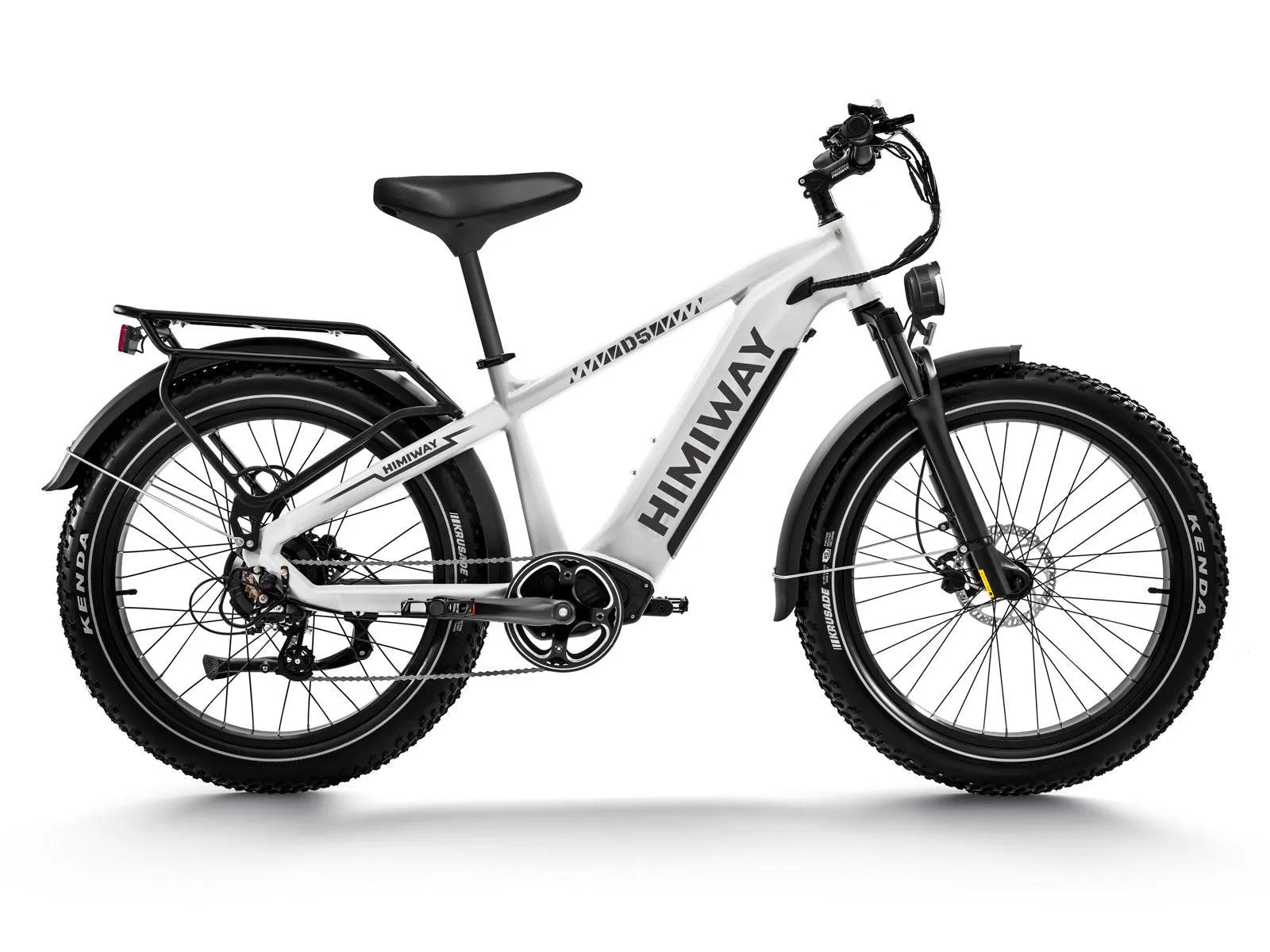
Himiway Zebra / D5
A high-capacity fat-tire electric bike built for riders who want substantial battery capacity, strong motor assistance and mixed-terrain capability.
- 750W brushless geared motor
- 960Wh Samsung/LG 48V 20Ah battery
- Up to 80 miles claimed range
- 26 × 4.0-inch Kenda fat tires
- Torque sensor
- 400-lb maximum payload
- Tektro hydraulic disc brakes
- 95mm-travel front suspension
- Shimano Altus 7-speed drivetrain
- 79 lb with battery
Himiway's current page shows promotional pricing and availability that can change. Check the live offer before ordering.

Himiway Zebra ST
The step-through version keeps the Zebra's general all-terrain concept while offering a lower-entry frame design.
- 750W motor
- 960Wh Samsung/LG battery
- Up to 80 miles claimed range
- 26 × 4.0-inch fat tires
- Torque sensor
- 400-lb payload specification
- Hydraulic brakes
- Front suspension
Quick Answer: Is the Himiway Zebra Electric Bike Worth It?
The Himiway Zebra is a strong fit for riders who want a large-battery fat-tire e-bike rather than a lightweight city commuter. Its current specification combines a 750W geared motor, 960Wh Samsung/LG battery, torque sensor, 26 × 4.0-inch Kenda tires, front suspension and hydraulic disc brakes.
The standout feature is the combination of battery capacity and all-terrain hardware. Himiway claims up to 80 miles of range with pedal assist, although actual range will vary with rider weight, terrain, assist level, speed, temperature, wind and tire pressure.
At 79 pounds with the battery, the Zebra is not a lightweight e-bike. That is one of the most important things to understand before buying. The same mass that contributes to its planted feel also makes carrying the bike upstairs or loading it onto some racks more difficult.

Himiway Zebra Electric Bike Specs
Here are the major specifications to know before purchasing the Himiway Zebra/D5.
| Specification | Himiway Zebra / D5 |
|---|---|
| Motor | 750W brushless geared hub motor |
| Battery | 48V 20Ah / 960Wh Samsung/LG |
| Claimed range | Up to 80 miles with pedal assist |
| Top speed | 20+ mph listed by Himiway |
| Tires | 26 × 4.0-inch Kenda fat tires |
| Sensor | Torque, speed and brake sensors |
| Brakes | Tektro hydraulic disc brakes |
| Rotors | 180mm front / 180mm rear |
| Front suspension | 95mm travel |
| Drivetrain | Shimano Altus M310 7-speed |
| Throttle | Thumb throttle |
| Frame | 6061 aluminum |
| Bike weight | 79 lb with battery |
| Maximum payload | 400 lb |
| Recommended rider height | 5'3"–6'5" |
Himiway Zebra Electric Bike Review
The Himiway Zebra electric bike is one of the company's established fat-tire models, and it has a very different personality from lightweight commuter e-bikes. The current D5/Zebra is designed around stability, battery capacity, motor assistance and versatility.
The result is a bike that can make sense for riders who don't want to limit themselves to smooth pavement. Its 26 × 4.0-inch tires give it a very different footprint from a traditional hybrid e-bike, while the 960Wh battery gives the bike a substantial energy reserve on paper.
But there is a trade-off. A bike with a 750W motor, large battery, suspension fork and four-inch tires is naturally going to be heavier than a minimalist commuter. The Zebra weighs 79 pounds with the battery, so storage and transportation deserve consideration before buying.
1. Himiway Zebra Motor Performance
The Zebra uses a 750W brushless geared motor. This is one of the key reasons the bike appeals to riders who want assistance on hills and mixed terrain.
Motor wattage alone does not tell you exactly how an e-bike will perform. Controller limits, battery voltage, gearing, rider weight, terrain, tire pressure and pedal input all influence acceleration and climbing.
The Zebra also uses a torque sensor. Instead of simply responding to pedal movement, a torque-sensing system can respond to how much force the rider is applying. For riders who pedal actively, this can produce a more natural feeling of motor assistance.
2. The 960Wh Battery Is a Major Selling Point
Battery capacity is one of the most important numbers to look at when shopping for an electric bike. The Zebra's 48V 20Ah battery works out to 960Wh.
Himiway currently lists up to 80 miles of range with pedal assist and says the battery can provide up to 60 miles on pure electric power under its stated conditions.
These are manufacturer claims, not guaranteed real-world distances. A heavier rider climbing hills at high assist can use considerably more energy than a lighter rider traveling at moderate speed on flat pavement.
Still, a 960Wh battery is a meaningful advantage for riders who want fewer charging stops and longer recreational rides.
3. What Does 80 Miles of Range Actually Mean?
When an e-bike manufacturer publishes a maximum range, think of it as a reference point rather than a promise.
Range is influenced by:
- Rider weight
- Riding speed
- Pedal-assist level
- Throttle usage
- Hills and elevation
- Wind
- Temperature
- Tire pressure
- Terrain
- Acceleration frequency
If maximum range matters to you, use lower assist on flat sections, keep the tires correctly inflated and avoid unnecessary hard acceleration.
4. 26 × 4.0 Fat Tires
The Zebra's 26 × 4.0-inch Kenda tires are immediately noticeable. Four-inch tires give the bike a much wider contact patch than the tires found on most conventional commuter e-bikes.
That additional tire volume can be useful on loose surfaces and uneven terrain. It can also provide a more cushioned feeling when riding over rough surfaces.
The trade-off is rolling resistance and weight. If your entire commute is smooth pavement, a narrower tire can be more efficient and agile. If your riding includes gravel, dirt or rough trails, the Zebra's tire setup becomes much more relevant.
5. Front Suspension
Himiway lists a TRAMA front fork with 95mm of travel on the current Zebra specification.
Suspension is useful when the surface underneath the bike isn't smooth. Instead of forcing every impact directly through the handlebars and rider, the fork can absorb part of the movement.
For paved commuters, suspension may be less important than it is for someone riding gravel, trails or rough roads. The Zebra's front suspension therefore fits the bike's broader all-terrain positioning.
6. Hydraulic Disc Brakes
The current Zebra specification lists Tektro hydraulic disc brakes with 180mm rotors at the front and rear.
Hydraulic brakes are a useful feature on a heavier e-bike. A 79-pound bicycle moving at speed carries considerable momentum, particularly when the rider and cargo are added.
Good braking hardware doesn't eliminate the need for safe riding. Maintain the brakes, inspect pads periodically and adjust your riding speed to the terrain and conditions.
7. Shimano 7-Speed Drivetrain
The Zebra uses a Shimano Altus M310 7-speed drivetrain according to Himiway's current specifications.
Multiple gears are especially useful on an e-bike because the rider can choose an appropriate mechanical gear while the motor provides assistance.
On a climb, a lower gear can make pedaling easier. On flatter terrain, a higher gear can make it easier to maintain a comfortable cadence.
8. Torque Sensor vs Cadence Sensor
One of the Zebra's more interesting features is its torque sensor.
A cadence-only system generally activates assistance based on whether the pedals are moving. A torque sensor can measure pedal force and adjust motor assistance according to rider input.
Riders who enjoy actively pedaling often appreciate the more responsive character of torque sensing. It can also make the transition between human effort and electric assistance feel more intuitive.
9. 400-Pound Payload Capacity
Himiway lists a maximum payload capacity of 400 pounds for the Zebra. Payload means the combined permitted load specified by the manufacturer, so buyers should always check the current manual and product documentation for how that rating applies.
A higher payload can be useful for larger riders or for riders carrying practical equipment.
Remember that accessories such as racks, baskets and bags add weight. Stay within the manufacturer's stated limit.
10. Is the Himiway Zebra Good for Commuting?
Yes, it can work well as a commuter, but it isn't the lightest or most compact commuter design.
The advantage is versatility. Instead of having a bike optimized only for asphalt, you have a platform capable of handling rougher surfaces.
If your commute involves potholes, broken pavement, gravel sections or poorly maintained roads, the wider tires and suspension can be valuable.
If your commute involves carrying the bike upstairs every morning, however, the 79-pound weight becomes a much more important consideration.
11. Is the Zebra Good for Off-Road Riding?
The specification clearly points toward mixed-terrain use. The fat tires, suspension fork, geared motor and hydraulic brakes make the platform substantially more trail-oriented than a lightweight city e-bike.
However, "all-terrain" does not mean every trail is appropriate. Riders should distinguish between maintained dirt paths and technical mountain-bike terrain.
Always inspect the trail, respect local access rules and use protective equipment appropriate for the riding conditions.

12. Is the Himiway Zebra Too Heavy?
At 79 pounds with the battery, the Zebra is definitely a heavy e-bike. Whether that is a problem depends entirely on how you use it.
If the bike lives in a garage and you ride directly from your driveway, weight may not matter much.
If you live in a third-floor apartment without an elevator, need to lift the bike onto a rack or frequently transport it in a vehicle, weight should be one of your first buying considerations.
13. Rider Height
Himiway lists a recommended rider-height range of approximately 5'3" to 6'5" for the Zebra.
Height is only a starting point. Leg length, reach and riding position also affect comfort.
If you can visit a Himiway dealer or test the model locally, doing so can be particularly useful before spending around $1,500 on a high-ticket e-bike.
14. What Comes With the Himiway Zebra?
The current Himiway listing identifies the bike and standard equipment, while available promotions can include additional items or accessory offers. Himiway's product page currently shows accessories such as helmets, mirrors, phone holders, locks, saddle bags and racks.
Because bundles and promotions change, verify the exact contents of your order at checkout rather than relying on an older review or screenshot.
15. Himiway Zebra vs a Normal Electric Bike
A conventional commuter e-bike might weigh substantially less and use narrower tires. The Zebra goes in the opposite direction.
You get a larger battery, wider tires, suspension, substantial frame construction and higher payload capacity.
That makes the Zebra appealing to buyers who want one bike to cover multiple environments rather than a specialized lightweight commuter.
16. Himiway Zebra vs Smaller-Battery E-Bikes
Battery capacity is one of the Zebra's strongest specifications. A 960Wh battery gives you considerably more stored energy than many entry-level e-bikes.
More capacity can mean longer rides and less frequent charging, although it also contributes to weight and cost.
For someone who only rides three miles each way to work, a huge battery may be unnecessary. For someone who wants long weekend rides, carries cargo or frequently rides hills, the extra capacity can be much more useful.
17. Himiway Zebra vs Himiway D5 2.0
The naming can be confusing because Himiway currently uses the D5 name for multiple products. The Zebra is the earlier D5 all-terrain fat-bike platform, while the D5 2.0 is a newer generation with different specifications and pricing.
Don't assume that "D5" means identical equipment. Check the product title, motor, battery, suspension, weight and drivetrain on the exact listing you are purchasing.
18. Battery Charging and Ownership
A large battery also means you should think about charging and storage. Follow Himiway's charging instructions and use the supplied or approved charger.
Keep the battery away from excessive heat and moisture, and don't modify the battery or electrical system with incompatible components.
If you won't ride the bike for an extended period, follow the manufacturer's recommended storage procedure.
19. Maintenance
The Zebra still requires ordinary bicycle maintenance despite having an electric motor.
- Check tire pressure regularly.
- Inspect brake pads and rotors.
- Keep the drivetrain clean.
- Lubricate the chain appropriately.
- Check bolts and fasteners periodically.
- Inspect tires for cuts or excessive wear.
- Keep electrical connections protected.
- Follow battery charging and storage instructions.
20. Is the Himiway Zebra a Good First E-Bike?
It can be, particularly for a buyer who wants a substantial bike and expects to ride on more than smooth pavement.
However, first-time buyers should not automatically choose the biggest motor or battery. Think about where you will store the bike, how far you ride, whether you need to transport it and what kind of terrain you actually encounter.
If you want something light and easy to carry, the Zebra's 79-pound weight may be excessive. If you want stability, battery capacity and fat tires, those same characteristics may be exactly what you're looking for.
21. Himiway Zebra Price and Current Deal
At the time this article was researched, Himiway's U.S. product page displayed the Zebra at $1,499 compared with a $2,299 reference price, showing an $800 saving. Promotions and prices can change, so use the live product page to confirm today's offer.
Himiway is also currently promoting an anniversary sale on its site, which means buyers should check the live page for current promotional bundles, accessory offers and availability before completing an order.
22. Who Should Buy the Himiway Zebra?
The Zebra is particularly relevant if several of these statements describe your riding:
- You want a fat-tire electric bike.
- You ride gravel or mixed surfaces.
- You want a large 960Wh battery.
- You frequently ride hills.
- You want hydraulic disc brakes.
- You want a 400-lb payload specification.
- You prefer a planted riding feel.
- You want a bike suitable for longer recreational rides.
- You don't mind a heavier e-bike.
23. Who Should Consider Another E-Bike?
The Zebra may not be the ideal design for everyone.
Consider another type of e-bike if your biggest priorities are low weight, easy stair carrying, compact storage or highly efficient pavement-only commuting.
Likewise, serious mountain-bike riders who want aggressive technical trail performance may want to compare purpose-built electric mountain bikes with geometry and suspension designed specifically for that use.
24. Himiway Zebra Buying Checklist
- Confirm the exact D5/Zebra model.
- Confirm high-step or step-through frame.
- Check current price.
- Check current promotional bundle.
- Verify battery capacity.
- Verify motor configuration.
- Confirm rider-height range.
- Measure your storage space.
- Check whether your bike rack can carry 79+ pounds.
- Review shipping conditions.
- Read warranty terms.
- Read return conditions before ordering.

Himiway Zebra vs Other Himiway Electric Bikes
The best comparison isn't simply about which bike has the largest motor. Each Himiway model is aimed at a different type of rider.
| Model | General Focus | Motor | Battery | Best For | View |
|---|---|---|---|---|---|
| Himiway Zebra / D5 | All-terrain fat bike | 750W | 960Wh | Mixed terrain, long rides | View |
| Zebra ST | Step-through all-terrain | 750W | 960Wh | Easier frame access | View |
| D5 Pro | All-terrain | 500W mid-drive | 960Wh | Torque-focused riding | Guide |
| D7 Pro | Mountain / performance | 1000W mid-drive | 960Wh | More aggressive riding | Guide |
E-Bike Watts → Horsepower & Speed Calculator
Enter the motor wattage and advertised speed to get a simple horsepower conversion. Speed cannot be accurately predicted from wattage alone because gearing, controller limits, aerodynamics, rider input and terrain all matter.
Enter your numbers to calculate.
Himiway Zebra Electric Bike FAQ
How fast does the Himiway Zebra electric bike go?
Himiway currently lists the Zebra with a 20+ mph top-speed specification. Actual speed depends on the configured bike, riding conditions, rider input and applicable local regulations.
How far can the Himiway Zebra go on one charge?
Himiway currently advertises up to 80 miles of range with pedal assist and up to 60 miles under its stated pure-electric conditions. Actual range varies with rider weight, terrain, assist level, speed, weather and other factors.
How powerful is the Himiway Zebra?
The current Himiway Zebra/D5 specification lists a 750W brushless geared motor.
What size battery does the Himiway Zebra use?
The current model uses a 48V 20Ah Samsung/LG battery, equivalent to 960Wh.
Does the Himiway Zebra have fat tires?
Yes. The current Zebra specification lists 26 × 4.0-inch Kenda fat tires.
How much weight can the Himiway Zebra carry?
Himiway lists a maximum payload capacity of 400 pounds. Buyers should follow the manufacturer's current documentation and account for rider and cargo weight.
How much does the Himiway Zebra weigh?
Himiway currently lists the Zebra at approximately 79 pounds with the battery.
Is the Himiway Zebra good for off-road riding?
Its 26 × 4.0-inch tires, front suspension, 750W motor, hydraulic brakes and large battery make it suited to mixed terrain and recreational off-road use. Riders should choose terrain appropriate for the bike and follow local trail rules.
Does the Himiway Zebra have hydraulic brakes?
Yes. The current specification lists Tektro hydraulic disc brakes with 180mm rotors.
Is the Himiway Zebra worth buying?
It is worth considering for riders who prioritize battery capacity, fat tires, motor assistance, suspension and payload over low weight. Riders looking for a lightweight commuter may prefer a different type of e-bike.
Ready to Check the Himiway Zebra?
The Zebra combines a 750W motor, 960Wh battery, 26 × 4.0-inch fat tires, torque sensing, suspension and hydraulic brakes into one versatile all-terrain platform.
Himiway promotions and inventory can change quickly. Check the live product page for the current price, available colors, accessories and promotional offers.
Product specifications, prices, promotions and availability can change. Verify the manufacturer's live product page before publishing or making a purchase decision.