

Himiway Zebra Review: 750W, 80-Mile E-Bike
Himiway Zebra Review: Is This 750W Fat-Tire E-Bike Worth It?
Looking for a powerful electric bike that can handle commuting, gravel, trails, hills and rougher terrain without jumping into the $2,000+ premium category? The Himiway Zebra is one of the most interesting high-range fat-tire e-bikes to consider.
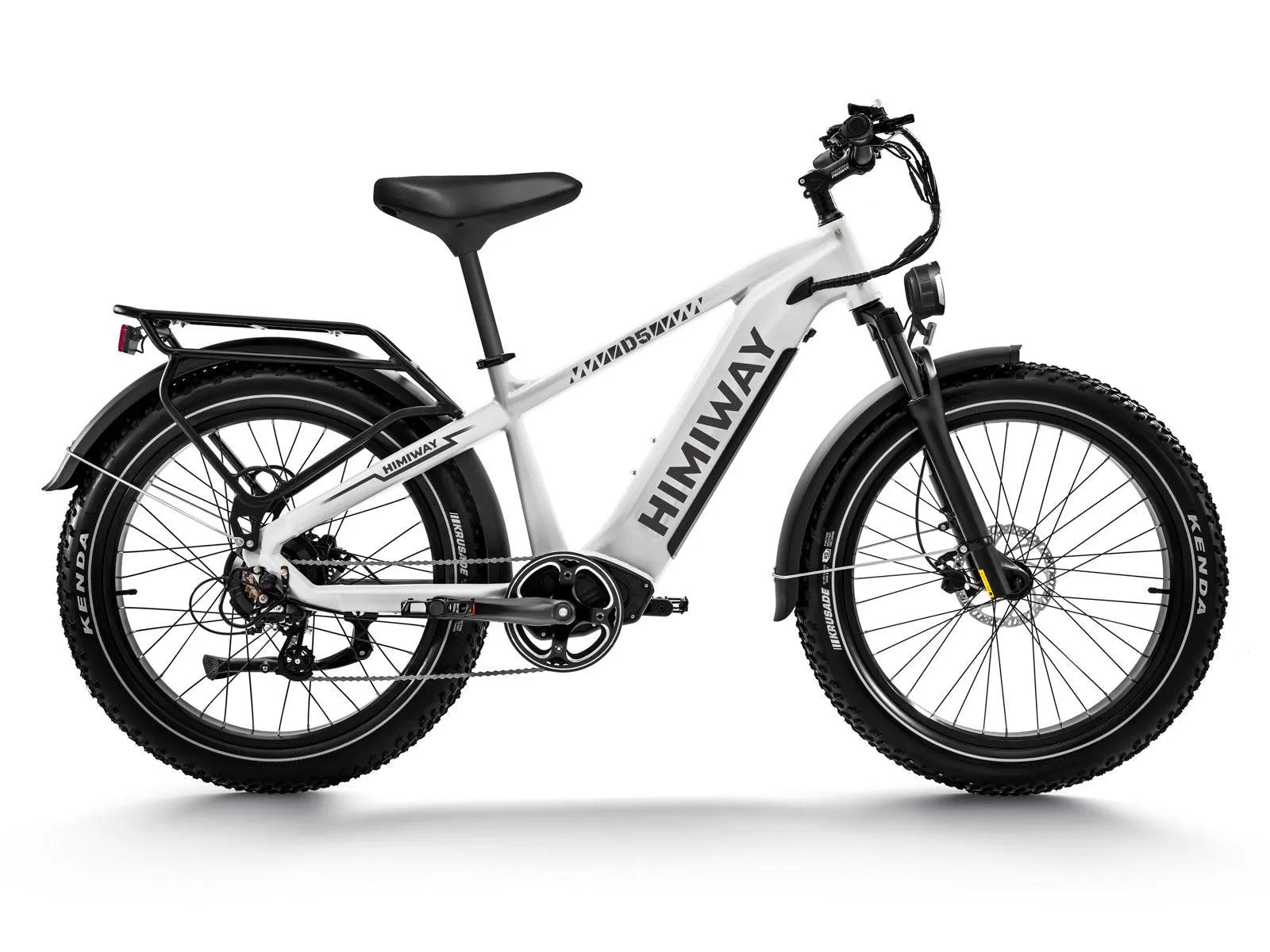
Our Top Himiway Zebra Picks
The original Zebra name has evolved into the Himiway D5. The current D5/Zebra family gives buyers a choice between a traditional step-over frame and a more accessible step-through design.
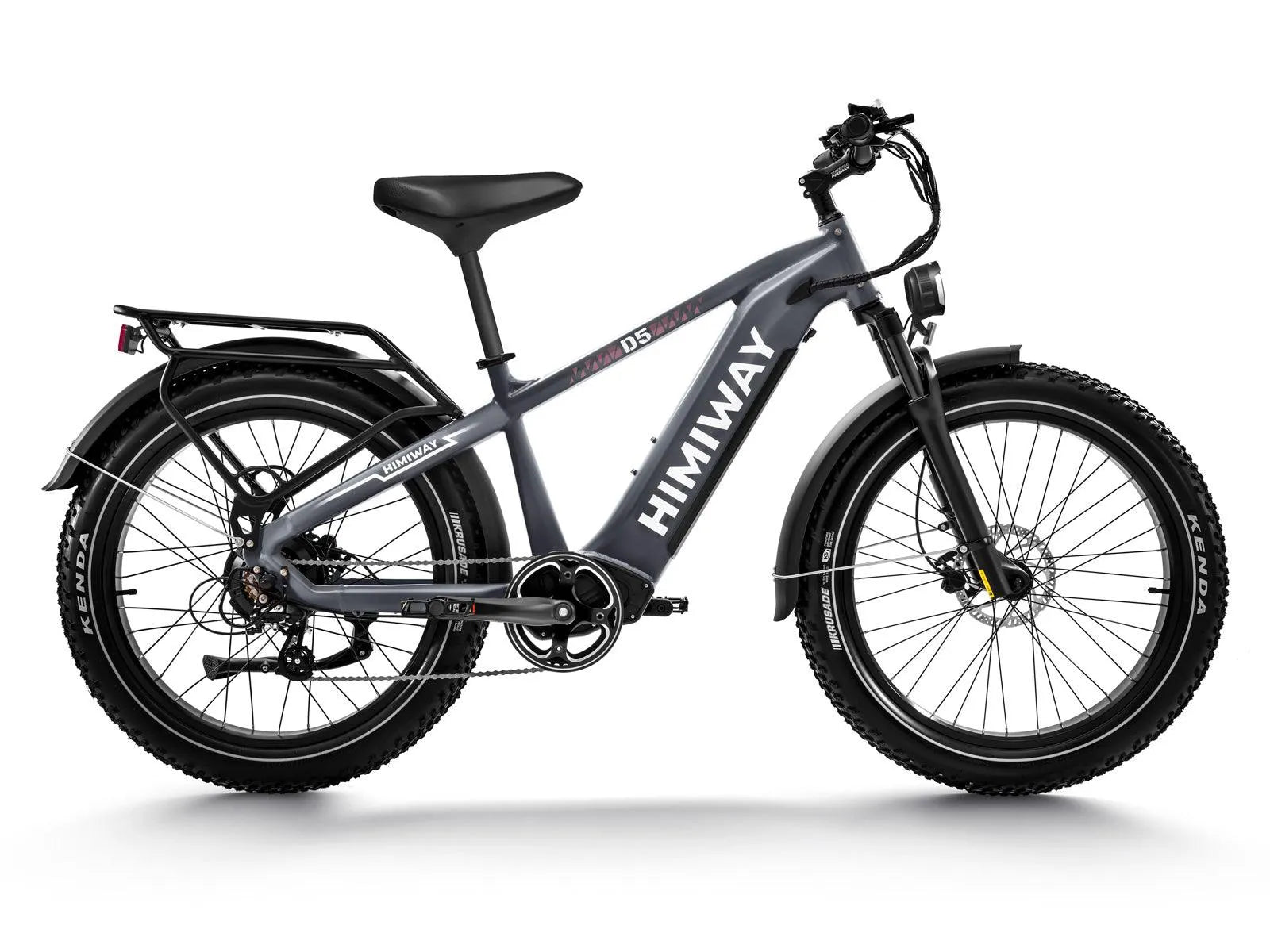
Himiway Zebra / D5
The best overall choice for riders who want a long-range, high-capacity fat-tire e-bike with a strong frame and conventional step-over geometry.
- 750W brushless geared hub motor
- 960Wh Samsung/LG battery
- Claimed 60–80 mile range
- 26 × 4.0-inch Kenda fat tires
- Torque sensor for more natural pedal assistance
- Tektro hydraulic disc brakes
- 400-lb maximum payload

Himiway Zebra ST / D5 ST
The step-through version is worth considering if getting on and off a conventional high-step frame is inconvenient or if you simply prefer a more open frame design.
- Same long-range-oriented Zebra platform
- 750W-class motor configuration
- Large 960Wh battery platform
- Fat tires for loose and uneven surfaces
- Torque-sensing pedal assistance
- Hydraulic braking system
- More accessible step-through frame
Quick Answer: Is the Himiway Zebra Good?
Yes — especially if your priorities are battery capacity, range, fat-tire traction and a sturdy all-terrain platform.
The Himiway Zebra, now marketed as the D5, combines a 750W brushless geared motor with a 960Wh Samsung/LG battery, 26 × 4-inch fat tires, a torque sensor, hydraulic brakes and a frame rated for up to 400 pounds of payload.
Its biggest advantage is not simply motor wattage. The combination of a large battery, fat tires, useful carrying capacity and torque-sensing assistance makes the Zebra more versatile than a basic commuter e-bike.
See Current Zebra Offer →✓ What We Like
- Large 960Wh battery
- Strong 750W motor
- Torque sensor
- 4-inch fat tires
- Hydraulic disc brakes
- High 400-lb payload rating
- Useful for pavement and trails
- Strong value when discounted
△ What to Consider
- Heavy compared with lightweight e-bikes
- Fat tires increase rolling resistance
- Real-world range varies significantly
- Large frame needs suitable storage
- Not designed as a lightweight road bike
- Local e-bike laws still apply
Himiway Zebra Specs at a Glance
Before buying an expensive e-bike, it helps to compare the specifications that actually affect everyday ownership. Motor wattage gets most of the attention, but battery capacity, tires, brakes, payload and sensor type can be equally important.
Himiway Zebra vs Zebra ST
For most shoppers, the biggest decision is not motor power. Both versions are built around the same general Zebra/D5 philosophy. The question is whether you want the traditional step-over frame or the easier-access step-through configuration.
| Feature | Himiway Zebra / D5 | Zebra ST / D5 ST |
|---|---|---|
| Motor | 750W brushless geared motor | 750W-class platform |
| Battery | 960Wh Samsung/LG | 960Wh platform |
| Claimed range | 60–80 miles | Up to around 80 miles depending on conditions |
| Tires | 26 × 4.0-inch fat tires | 26 × 4.0-inch fat tires |
| Sensor | Torque sensor | Torque sensor |
| Brakes | Hydraulic disc | Hydraulic disc |
| Frame style | Step-over | Step-through |
| Best for | Maximum conventional frame feel | Easy mounting and dismounting |
| CTA | View Zebra | View Zebra ST |
Electric Bike Motor Calculator
Want to understand what a motor's wattage means? Enter motor power, rider weight and bike weight below. The horsepower calculation is mathematical. The speed result is only a rough estimate because real e-bike speed depends on gearing, controller limits, aerodynamics, terrain, tire pressure, rider position and local regulations.
Calculator estimates are for educational comparison only and should never be treated as a guaranteed road speed.
Himiway Zebra Review: What Makes This E-Bike Different?
The Himiway Zebra sits in a sweet spot for riders who want more than a basic city e-bike but do not necessarily want to spend several thousand dollars on a high-end mountain e-bike.
Its design is built around a simple idea: give the rider enough battery, tire volume, motor output and carrying capacity to make the bike useful beyond perfect pavement.
That matters because many affordable electric bikes are optimized around one narrow use case. A lightweight commuter may be fantastic on asphalt but uncomfortable on loose gravel. A compact folding e-bike is easy to store but may sacrifice stability. A high-powered off-road bike can be exciting but may not be the best choice for daily transportation.
The Zebra takes the opposite approach. Its 26 × 4.0-inch fat tires give the bike a substantial contact patch, while the large battery is designed for riders who do not want to constantly think about charging.
1. The 750W Motor Is About More Than Top Speed
A 750W motor gives the Zebra plenty of electrical assistance for normal commuting and moderate off-road riding. But buyers should avoid judging an e-bike solely by its wattage number.
Motor behavior is also influenced by the controller, battery voltage, gearing, rider weight, incline, tire pressure, temperature and software limits. Two e-bikes with identical nominal wattage can feel very different.
The Zebra's geared hub motor is particularly interesting for riders who want a practical combination of acceleration and climbing assistance. The official specifications list an 86Nm maximum motor torque on the current D5 listing.
2. The 960Wh Battery Is One of the Zebra's Biggest Advantages
If you are shopping for a long-range electric bike, battery capacity should be one of your first comparison points.
The Zebra uses a 48V 20Ah battery, equivalent to approximately 960Wh. That is a substantial battery for a bike in this price class.
Himiway advertises a range of roughly 60–80 miles depending on how the bike is ridden. That does not mean every rider should expect 80 miles from every charge.
Real range can fall considerably with heavy riders, steep hills, strong headwinds, low temperatures, aggressive throttle use, high pedal-assist levels, underinflated tires and frequent acceleration.
3. Why the Torque Sensor Matters
One of the more important features of the Zebra is its torque sensor. A torque sensor measures how hard the rider is pushing the pedals and uses that information to adjust motor assistance.
In practical terms, that can make the bike feel more natural than a basic cadence-only system. When you push harder, the motor can respond with more assistance. When you ease off, the assistance can reduce.
This is particularly useful on hills and mixed terrain because the rider can control the relationship between human effort and motor power more intuitively.
4. Fat Tires Make the Zebra Versatile
The 26 × 4.0-inch Kenda tires are a defining part of the Zebra's character.
Wide tires provide additional flotation and stability on surfaces where narrow commuter tires can feel nervous. Gravel, packed dirt, sand, grass and some snow conditions can become more manageable with the right tire pressure and riding technique.
However, fat tires have a trade-off. They are heavier and can create more rolling resistance than narrow road-oriented tires.
That means the Zebra is not designed to be the fastest road bike in the world. It is designed to be a versatile electric utility bike that can move confidently across different surfaces.
5. Hydraulic Brakes Are a Major Plus
An electric bike weighing roughly 79 pounds before the rider needs dependable stopping power.
The Zebra uses Tektro hydraulic disc brakes with 180mm rotors. Hydraulic brakes generally offer strong braking performance and good modulation when properly maintained.
For a heavy fat-tire e-bike, hydraulic braking is a feature we strongly prefer over basic mechanical systems.
6. The 400-Pound Payload Rating Expands Its Use Cases
Himiway lists a maximum payload capacity of 400 pounds. Payload means the combined load the bike is designed to carry, so buyers should think about rider weight plus cargo rather than interpreting the number as a recommended rider weight alone.
This makes the Zebra appealing for riders who want to carry backpacks, groceries, work equipment or other everyday cargo.
The rear rack and included equipment also make it more practical as a transportation tool rather than simply a recreational toy.
7. Is the Himiway Zebra Good for Commuting?
Yes, particularly if your commute includes poor pavement, gravel, potholes or mixed surfaces.
The main consideration is weight. A nearly 80-pound e-bike is not the easiest bike to carry upstairs or load into a small vehicle.
If your commute starts from a garage and ends at a workplace with secure bike parking, the weight may be relatively unimportant.
If you live in a third-floor apartment without an elevator, a lighter e-bike may make more sense.
8. Is the Himiway Zebra Good for Hills?
The combination of a 750W motor, geared hub design and torque sensor makes the Zebra well suited to riders who regularly encounter hills.
However, hill performance is never determined by wattage alone. Rider weight, gradient, tire pressure, battery state of charge and riding technique all influence climbing performance.
For steep climbs, using an appropriate lower gear while allowing the torque sensor to provide assistance is generally preferable to relying entirely on throttle power.
9. Is the Zebra Good for Trails?
The Zebra is particularly attractive for riders who want an e-bike for light-to-moderate trail use, gravel roads and general outdoor riding.
The fat tires and suspension fork give it a more forgiving setup than a pure road commuter.
But it is important to understand what it is not. This is not a lightweight competition mountain bike. Extremely technical trails, jumps and aggressive downhill riding require a purpose-built bicycle and appropriate protective equipment.
10. Real-World Range: What Should You Expect?
Himiway's advertised range is up to 60–80 miles depending on riding conditions and assistance level.
For a realistic shopping decision, think of advertised range as a best case rather than a guaranteed everyday number.
If you are a lighter rider on flat pavement using moderate pedal assistance, you can potentially achieve excellent range.
If you are heavier, ride hills, use high assistance and frequently use the throttle, your range can be substantially lower.
The important point is that the 960Wh battery gives the Zebra a strong starting point. A larger battery gives you more energy to work with before recharging becomes necessary.
11. Himiway Zebra Weight: Is 79 Pounds Too Heavy?
At approximately 79 pounds with the battery, the Zebra is definitely on the heavier side of the e-bike market.
But there is a reason. The bike combines a large battery, powerful motor, heavy-duty frame, suspension fork, hydraulic brakes, fat tires, rack hardware and other equipment.
In other words, weight is part of the trade-off for capability.
If your priority is portability, choose a lighter commuter. If your priority is stability, battery capacity and all-terrain versatility, the Zebra's weight becomes easier to justify.
12. Himiway Zebra Frame and Rider Fit
Himiway lists a recommended rider height range of approximately 5'3" through 6'5" for the current D5 platform.
The frame uses 6061 aluminum and is designed around a relatively substantial all-terrain build.
Before purchasing, check the current geometry measurements and compare them against your inseam, preferred riding position and storage space.
The Zebra ST can be particularly attractive if you prioritize easier mounting and dismounting.
13. What Comes With the Himiway Zebra?
The current product listing indicates equipment such as a charger, manual, rear rack, protection fender kit and a 16-in-1 repair tool are included with the listed configuration. Included accessories and promotional bundles can change, so always verify the live product page before ordering.
14. Himiway Zebra vs a Cheap $1,000 E-Bike
A cheaper e-bike can look attractive because it saves hundreds of dollars at checkout. But the purchase price is only one part of the equation.
If you are comparing the Zebra against a generic $700–$1,000 e-bike, look closely at battery capacity, motor design, brakes, tire size, payload rating, sensor type, warranty and replacement parts.
The Zebra's value proposition comes from combining these components into one platform.
That does not automatically make it the best e-bike for everyone. Someone riding three miles on flat pavement may be perfectly happy with a smaller commuter. Someone riding 20 miles over mixed terrain may get substantially more value from the Zebra.
15. Himiway Zebra vs a $2,000+ E-Bike
The more interesting comparison is against premium e-bikes costing $2,000 or more.
Here the Zebra becomes compelling when discounted because it provides many of the specifications buyers usually seek in a more expensive machine: a large battery, hydraulic brakes, torque sensing, fat tires, substantial payload capacity and a powerful geared motor.
Premium competitors may still win in areas such as lighter weight, suspension quality, frame refinement, proprietary electronics or advanced connected features.
But if your main goal is practical range and capability per dollar, the Zebra deserves a serious look.
16. Who Should Buy the Himiway Zebra?
The Himiway Zebra is best suited to buyers who want one e-bike to do several jobs.
- Daily commuters who want extra range
- Riders dealing with hills
- Gravel-road riders
- Outdoor recreation enthusiasts
- Riders who value wide tires and stability
- People who need meaningful cargo capacity
- Heavier riders who need a high payload rating
- Buyers who prefer torque-sensor assistance
17. Who Should Skip the Zebra?
There are also situations where a different e-bike would make more sense.
- You need to carry your bike upstairs frequently.
- You want a very lightweight road e-bike.
- You only ride short distances on smooth pavement.
- You want an ultra-compact folding bike.
- You primarily ride highly technical mountain trails.
- You need a bicycle that fits inside a very small vehicle.
18. Is the Himiway Zebra Worth $1,500?
At a price around $1,500, the Zebra's value is strongest for buyers who will actually use its large battery and all-terrain hardware.
You are not simply buying a motor. You are paying for the entire platform: battery, frame, tires, brakes, suspension, drivetrain, electronics and cargo capability.
For someone who only needs a basic five-mile commuter, that capability can be unnecessary.
For someone who wants a single e-bike capable of commuting during the week and exploring trails on the weekend, the calculation is very different.
19. What We Would Check Before Ordering
- Confirm the current sale price.
- Confirm your preferred frame style.
- Check your local e-bike regulations.
- Confirm shipping availability to your location.
- Review the current warranty terms.
- Review the return policy and any restocking fee.
- Check current battery and accessory availability.
- Measure your storage area.
- Confirm that the bike's weight works for your lifestyle.
Continue Your E-Bike Research
If you are comparing the Himiway Zebra with other electric bikes, building an internal content cluster around range, motor power, fat tires and buying guides can help you make a more informed decision.
Himiway Zebra FAQ
Is the Himiway Zebra a good electric bike?
Yes. The Himiway Zebra/D5 is a strong option for riders who want a powerful all-terrain e-bike with a large 960Wh battery, 750W motor, fat tires, hydraulic brakes and a high payload rating. It is particularly attractive for commuting, hills, gravel and general outdoor riding.
How fast is the Himiway Zebra?
Himiway lists a top speed of 20+ mph on the current D5 product listing. Actual speed can depend on configuration, rider weight, terrain, battery charge, conditions and applicable local regulations.
How far can the Himiway Zebra go on one charge?
Himiway lists a claimed range of approximately 60–80 miles for the current D5/Zebra platform. Actual range varies according to rider weight, terrain, temperature, tire pressure, assistance level, throttle use and other riding conditions.
How powerful is the Himiway Zebra motor?
The current Himiway D5/Zebra specification lists a 750W brushless geared hub motor. Himiway also lists up to 86Nm of motor torque on the current product information.
What battery does the Himiway Zebra use?
The current D5/Zebra uses a 48V 20Ah battery, equivalent to about 960Wh. Himiway identifies it as a Samsung/LG battery.
Is the Himiway Zebra good for heavy riders?
The current D5 specification lists a maximum payload capacity of 400 pounds. Remember that payload refers to the total load, including rider and cargo. Always check the latest manufacturer specifications before purchasing.
Does the Himiway Zebra have hydraulic brakes?
Yes. The current D5 specification lists Tektro hydraulic disc brakes with 180mm rotors at the front and rear.
What is the difference between the Zebra and Zebra ST?
The main difference is the frame design. The standard Zebra/D5 uses a step-over frame, while the Zebra ST/D5 ST uses a step-through configuration designed to make mounting and dismounting easier.
Is the Himiway Zebra good for off-road riding?
It is well suited to general off-road and mixed-terrain use such as gravel, dirt roads, packed trails and other moderate terrain. It is not intended to replace a lightweight, purpose-built competition mountain bike for extreme technical riding.
Is the Himiway Zebra worth buying?
For buyers who value long battery capacity, fat tires, a strong motor, hydraulic brakes and a high payload rating, the Zebra can be an excellent value when sold around the current promotional price. Buyers prioritizing low weight or maximum portability should look at lighter alternatives.
Ready to See the Himiway Zebra Deal?
The Zebra/D5 is one of the more compelling choices if you want a long-range fat-tire e-bike with a 750W motor, large 960Wh battery, torque sensing, hydraulic brakes and a 400-lb payload rating.
Because e-bike pricing, inventory and promotional bundles can change, check the live Himiway listing before making your final decision.
Himiway Zebra Specifications: Source Note
Specifications, pricing, promotions, included accessories and availability can change. This article should be treated as a buyer's guide rather than a substitute for the manufacturer's current product page. Always verify the live specification before purchase.
Current product information referenced for this guide includes Himiway's official D5/Zebra listing, including the 750W motor, 960Wh battery, 60–80-mile stated range, 20+ mph stated top speed, 400-lb payload, 26 × 4.0-inch tires, hydraulic brakes and 6061 aluminum frame.